2026 Restoration Industry Trends: 4 Expert Predictions You Need to Know

5 min read
2025 was a year set out for transformation, though it was not in the way any of us expected. Workload-wise, it wasn't the year we had hoped for. Claim volume declined in many markets, forcing companies to trim staff, tighten operations, and rethink how they do business.
I asked our team of industry experts what they're watching as we move into 2026. Their predictions focus on immediate, practical changes happening right now that will separate thriving businesses from struggling ones over the next year.
Prediction 1: Face-to-Face Sales Makes a Comeback While Non-Revenue Tasks Get Cut
"The days of waiting for the phone to ring are over," says Todd Sangid of DocuSketch. "Contractors who survived 2025's downturn by cutting staff can't just hire their way out of the next challenge. They need to fundamentally rethink what their people spend time on."
Todd is seeing two major shifts converge in 2026: the return of relationship-based sales and a focus on eliminating tasks that don't generate revenue.
The Return of In-Person Relationships
While operations have gone digital over the past five years, Todd predicts sales is returning to its pre-2020 roots. Insurance agents and property managers spent years building relationships on golf courses and over lunch. The pandemic forced everyone to adapt to virtual meetings and digital communication. But now? "The best work is going to contractors who show up in person," Todd says.
This doesn't mean technology becomes irrelevant. It means the application of technology shifts. Instead of using digital tools to replace face-to-face interaction, contractors need to use them to enhance it.
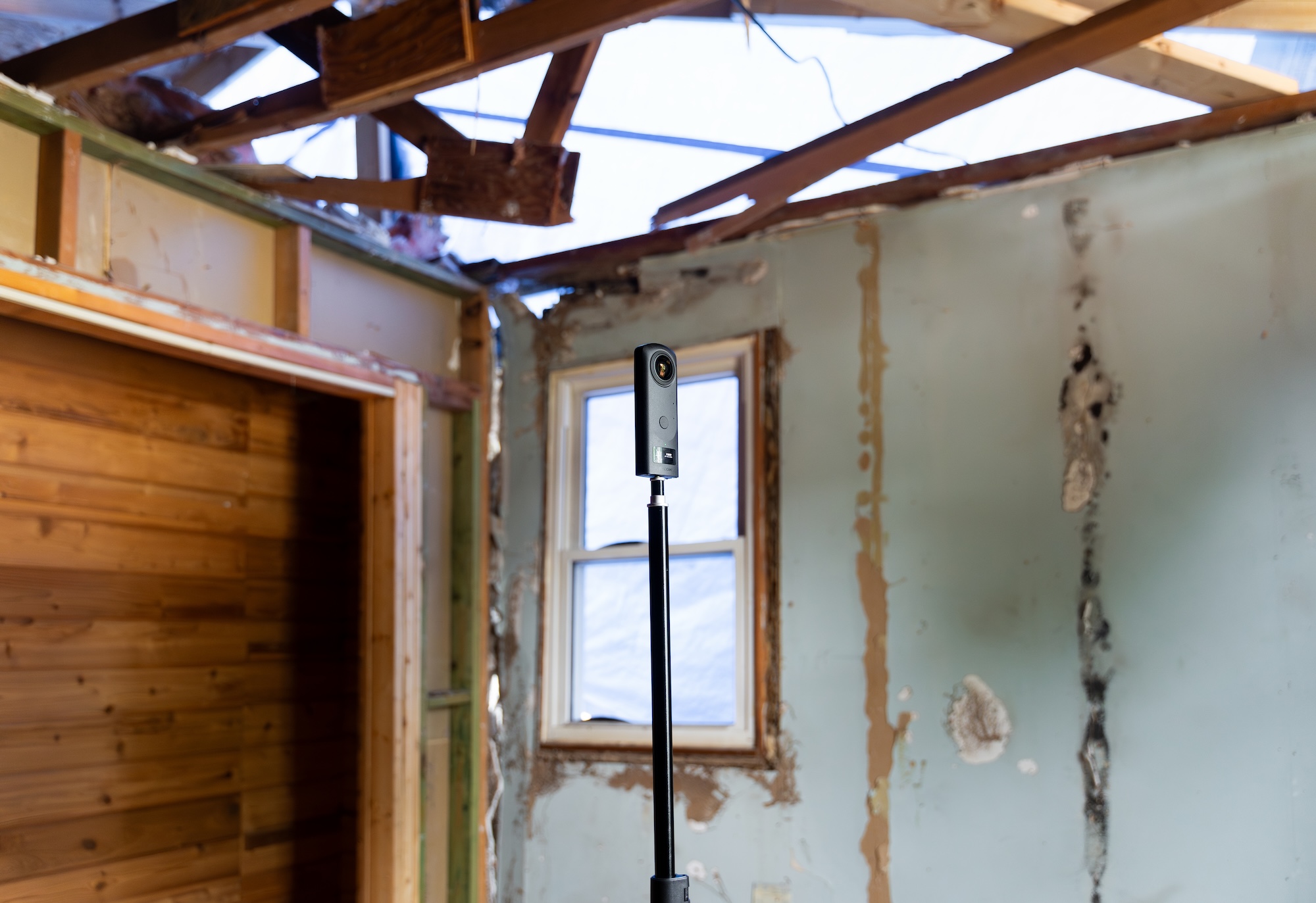
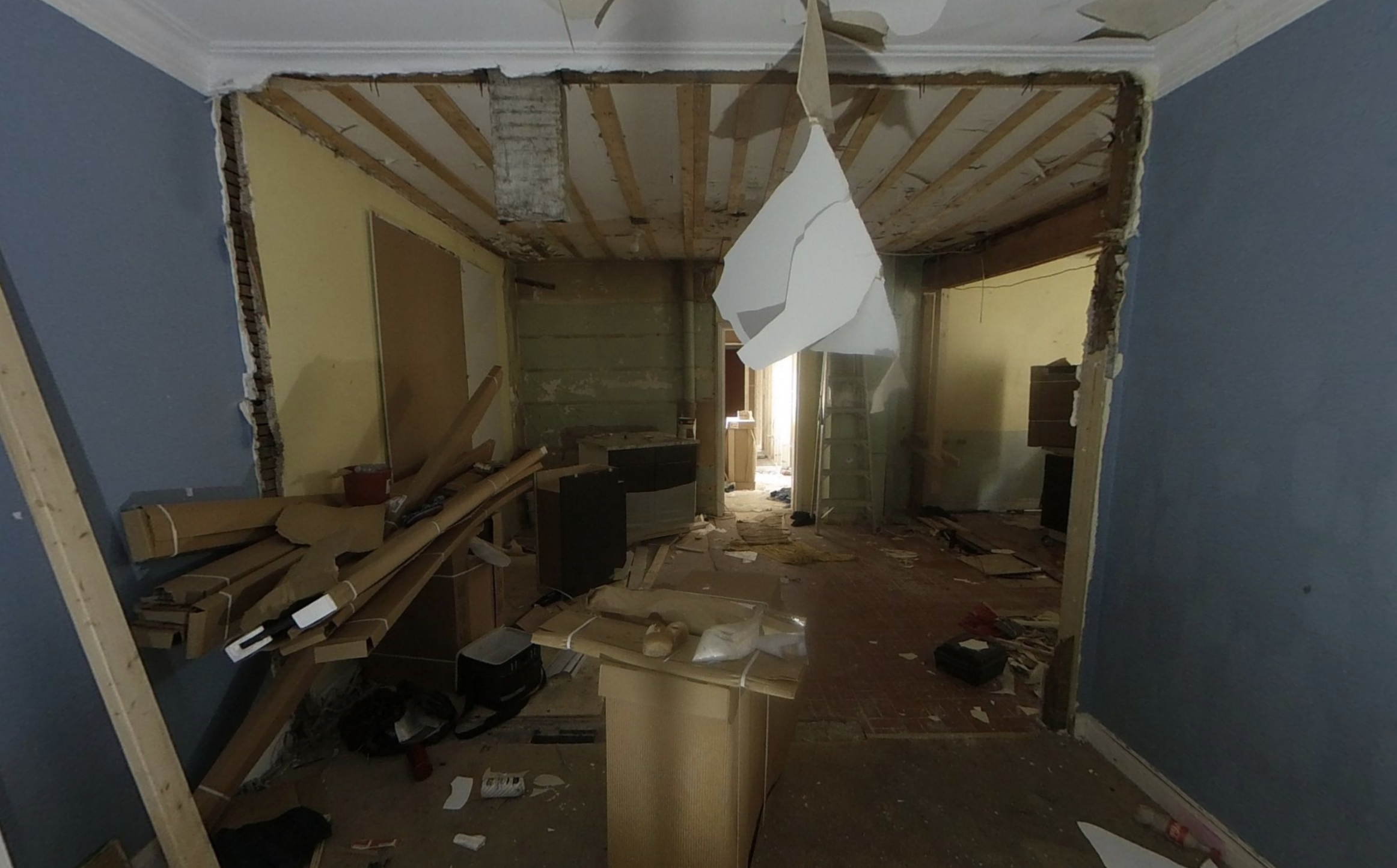
Think about walking into a property manager's office with a tablet showing immersive 360° visual documentation of their building. You're demonstrating professionalism and capability in a way that competitors using pen and paper simply can't match. The technology becomes a sales asset, not just an operational tool.
360° technology makes this approach practical: creating immersive property tours in under 20 seconds per room. Instead of showing up with a clipboard, you're walking in with a comprehensive visual record that demonstrates your investment in professional documentation.
The Efficiency Imperative
Todd shares this hard truth: We need to rethink the way we allocate resources in our operations.
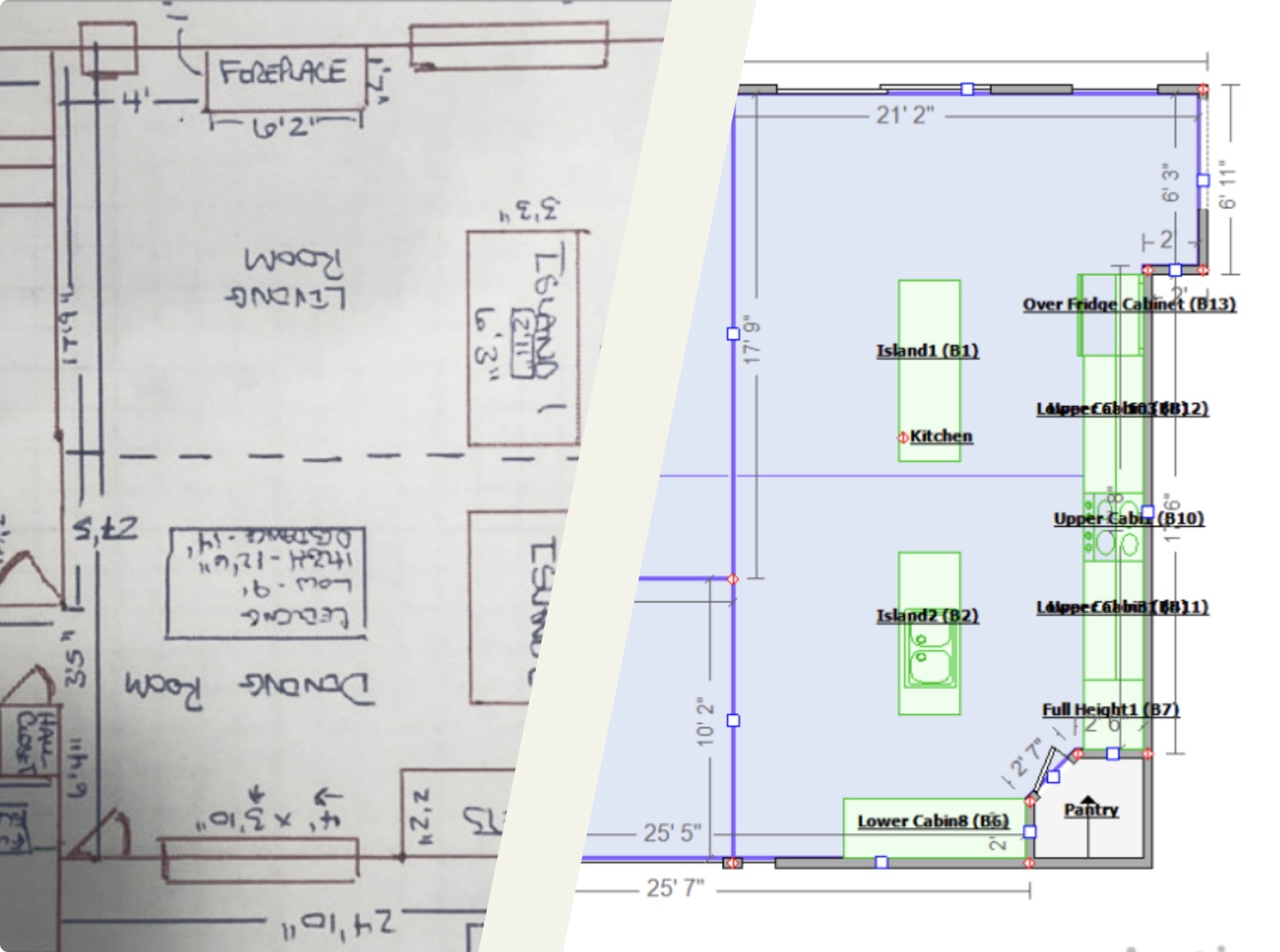
It’s all about freeing team members from tasks that don't generate revenue. Every hour spent on manual data entry, organizing photos, or reformatting sketches is an hour not spent on scoping new work, building carrier relationships, or reviewing estimates for maximum value capture.
Successful contractors in 2026 are those who've identified every non-revenue task in their workflow and either automated it, outsourced it, or eliminated it entirely. The goal is to ensure every dollar spent on labor is pushing toward profitability.
What This Means for You
If you're still waiting for work to come to you, start building a sales strategy today. Identify your ideal referral partners (insurance agents, property managers, plumbers) and create a systematic approach to building genuine relationships with them.
Look at your team's workflows and identify tasks that don't directly generate revenue. Manual data entry, photo organization, sketch reformatting—these are opportunities to support your team by automating, outsourcing, or eliminating them entirely. The goal is freeing your people to focus on high-value work: scoping jobs, building carrier relationships, and reviewing estimates for maximum value capture.
Prediction 2: Becoming the "First Call" Requires Real Relationships and Less Reliance on AI
Holly Baldwin of DocuSketch has watched the relationship-building with insurance carriers shift dramatically. Her prediction for 2026 centers on two critical realities: surface-level networking is dead, and AI is becoming a dangerous crutch.
The ‘First Call’ Strategy
"Dropping off cookies and branded stress balls doesn't work anymore," Holly says. "Agents see right through it."
Holly points to advice from Santa Davison at Servpro that captures the new reality perfectly. When approaching a new insurance agent, acknowledge if they already have a preferred vendor. Then ask: "What will it take to be your first call?"
This question does two things. First, it shows respect for their existing relationships. Second, it invites them to articulate their actual needs rather than making you guess.
"Real relationships are built over time," Holly explains. "Golf outings. One-on-one lunches where you're not selling, just listening. Understanding their business challenges and thinking about how you can genuinely help solve them." When claim volume drops and competition intensifies, the work goes to contractors who've invested in actual relationships, not transactional ones.
The AI Warning Label
Holly's second point is more urgent: "I'm seeing emails go out that are clearly AI-generated and nobody bothered to edit them. Same with estimates. People are using AI to write scopes and not checking the output. The quality is bad, and it's damaging relationships."
Holly's rule is simple: AI can give you speed, but it cannot give you quality without human oversight. Use it to draft, but never to deliver.
An AI-generated email to an adjuster might be 80% there, but that missing 20%—the personal touch, the project-specific context, the relationship-building detail—is what separates professional communication from robotic spam.
The right approach combines technology with human expertise. DocuSketch's Estimate Grader reviews estimates for carrier-specific requirements before submission, using technology to catch potential issues while keeping experienced estimators in control of the final product. You can try the Estimate Grader for free to see this in action.
What This Means for You
Build genuine relationships in 2026. Not networking connections, but actual relationships where people know your name, trust your work, and think of you first when a homeowner needs help.
Leverage AI for small administrative tasks like crafting emails but don't rely entirely on it; it still needs you for context. Working in collaboration with it will strengthen your results.
Prediction 3: Technology-Assisted Estimating
"Estimators aren't going to get replaced by technology," says Chris Tilkov from DocuSketch and founder of Ask Aime. "They're going to get replaced by estimators that use technology in a smart way."
Chris has a clear-eyed view of technology’s role in restoration that cuts through both the hype and the fear. His prediction for 2026 focuses on how technology assists humans during the scoping process—not after the fact, but in the moment, on-site.
Raising the Talent Floor
Documentation technology is evolving to assist estimators while they're still at the property, helping them capture complete, accurate information before it ever becomes an estimate.
This changes everything for companies trying to solve the labor shortage. Instead of needing years of experience to create a quality scope, you can educate an entry-level estimator and give them the framework to capture the right information from day one.
Experienced estimators will still catch nuances and optimize value capture in ways new team members won't. But it means the data coming back from the field is accurate and complete, rather than requiring costly revisits or leaving money on the table through missed damage.
What This Means for You
Focus instead on how technology can help your team produce better work faster.
And if you're evaluating new technology, look for tools that assist human judgment rather than trying to replace it. The best solutions help your people make better decisions, not make decisions for them.
Prediction 4: Hyper-Efficiency With Leaner Teams Becomes the New Normal
Kimberly Burdi-Dumas, DocuSketch's VP of InsureTech, brings an insurance carrier perspective that most contractors don't get to hear. Her prediction focuses on operational efficiency: restoration companies are learning to accomplish more with leaner teams by prioritizing high-value activities and streamlining processes.
The Lean Reality
"Companies cut 30% or more of their workforce in 2025," Kimberly says. "They're not hiring all those people back. When the next catastrophic event hits, and it will, they're going to have to handle the volume with the team they have."
The contractors who thrived during the downturn did so by streamlining processes and focusing ruthlessly on high-value activities. That discipline becomes the foundation for handling volume when it returns.
Retention Over Acquisition
Kimberly's second point is equally critical: a volatile market amplifies the importance of customer experience.
"You can't afford poor service in 2026," she says. "Every customer needs to feel heard and valued, not just processed."
This is harder than it sounds when you're stretched thin operationally. But it's essential. A customer who feels ignored or dismissed becomes a negative review, a lost referral source, and a cautionary tale that spreads through your community.
The answer is more than better communication; it's systems that create consistent, high-quality customer experiences even when you're handling surge volume with a lean team.
Technology enables this consistency at scale. DocuSketch lets you share 360° documentation in real-time with homeowners and carriers—providing transparency without adding phone calls or meetings to your schedule. The timeline view shows project progress chronologically, keeping everyone informed even when your team is managing multiple surge events simultaneously.
True Partnership with Carriers
Kimberly's final prediction focuses on the contractor-carrier relationship. "The vendor-client dynamic is evolving into true partnership," she says. "You can't succeed if your client isn't succeeding. You need to understand their business deeply."
This means knowing carrier-specific requirements before you submit an estimate. It means understanding the pressures adjusters face and making their job easier, not harder. It means building relationships that go beyond transactions.
What This Means for You
Start operating now like you're preparing for a surge event with your current team size. What processes need to change? What tasks can be eliminated or automated? Where are you creating unnecessary friction?
And shift your customer service approach from transactional to relational. Every interaction is an opportunity to build loyalty that will sustain you through market volatility.
What It All Adds Up To
When I look at these four predictions together, one theme keeps surfacing: our team sees technology and relationships becoming more intertwined, not less.
- The best sales still happen face-to-face, but contractors need the right tools to demonstrate capability in those meetings.
- Technology can accelerate workflows, but it works best when humans stay in control.
- Entry-level estimators can produce quality output when they have systems guiding them through the process.
- Lean teams can handle surge volume when technology helps eliminate the tasks that would otherwise slow them down.
None of this is about choosing between people and technology. The contractors our experts expect to thrive are those who've figured out how one can strengthen the other: technology that creates capacity for relationship work, and relationships that give context to how technology gets deployed.
These shifts are already underway. It's less about predicting the future and more about recognizing what's happening right now in the industry. The contractors who see these patterns early tend to be the ones who adapt most successfully.
Want to see how this works in practice? Our team is happy to walk you through how DocuSketch's tools fit into the workflow changes our experts are predicting for 2026. Book a demo to talk to one of our experts.
2025 was a year set out for transformation, though it was not in the way any of us expected. Workload-wise, it wasn't the year we had hoped for. Claim volume declined in many markets, forcing companies to trim staff, tighten operations, and rethink how they do business.
I asked our team of industry experts what they're watching as we move into 2026. Their predictions focus on immediate, practical changes happening right now that will separate thriving businesses from struggling ones over the next year.
Prediction 1: Face-to-Face Sales Makes a Comeback While Non-Revenue Tasks Get Cut
"The days of waiting for the phone to ring are over," says Todd Sangid of DocuSketch. "Contractors who survived 2025's downturn by cutting staff can't just hire their way out of the next challenge. They need to fundamentally rethink what their people spend time on."
Todd is seeing two major shifts converge in 2026: the return of relationship-based sales and a focus on eliminating tasks that don't generate revenue.
The Return of In-Person Relationships
While operations have gone digital over the past five years, Todd predicts sales is returning to its pre-2020 roots. Insurance agents and property managers spent years building relationships on golf courses and over lunch. The pandemic forced everyone to adapt to virtual meetings and digital communication. But now? "The best work is going to contractors who show up in person," Todd says.
This doesn't mean technology becomes irrelevant. It means the application of technology shifts. Instead of using digital tools to replace face-to-face interaction, contractors need to use them to enhance it.
Think about walking into a property manager's office with a tablet showing immersive 360° visual documentation of their building. You're demonstrating professionalism and capability in a way that competitors using pen and paper simply can't match. The technology becomes a sales asset, not just an operational tool.
360° technology makes this approach practical: creating immersive property tours in under 20 seconds per room. Instead of showing up with a clipboard, you're walking in with a comprehensive visual record that demonstrates your investment in professional documentation.
The Efficiency Imperative
Todd shares this hard truth: We need to rethink the way we allocate resources in our operations.
It’s all about freeing team members from tasks that don't generate revenue. Every hour spent on manual data entry, organizing photos, or reformatting sketches is an hour not spent on scoping new work, building carrier relationships, or reviewing estimates for maximum value capture.
Successful contractors in 2026 are those who've identified every non-revenue task in their workflow and either automated it, outsourced it, or eliminated it entirely. The goal is to ensure every dollar spent on labor is pushing toward profitability.
What This Means for You
If you're still waiting for work to come to you, start building a sales strategy today. Identify your ideal referral partners (insurance agents, property managers, plumbers) and create a systematic approach to building genuine relationships with them.
Look at your team's workflows and identify tasks that don't directly generate revenue. Manual data entry, photo organization, sketch reformatting—these are opportunities to support your team by automating, outsourcing, or eliminating them entirely. The goal is freeing your people to focus on high-value work: scoping jobs, building carrier relationships, and reviewing estimates for maximum value capture.
Prediction 2: Becoming the "First Call" Requires Real Relationships and Less Reliance on AI
Holly Baldwin of DocuSketch has watched the relationship-building with insurance carriers shift dramatically. Her prediction for 2026 centers on two critical realities: surface-level networking is dead, and AI is becoming a dangerous crutch.
The ‘First Call’ Strategy
"Dropping off cookies and branded stress balls doesn't work anymore," Holly says. "Agents see right through it."
Holly points to advice from Santa Davison at Servpro that captures the new reality perfectly. When approaching a new insurance agent, acknowledge if they already have a preferred vendor. Then ask: "What will it take to be your first call?"
This question does two things. First, it shows respect for their existing relationships. Second, it invites them to articulate their actual needs rather than making you guess.
"Real relationships are built over time," Holly explains. "Golf outings. One-on-one lunches where you're not selling, just listening. Understanding their business challenges and thinking about how you can genuinely help solve them." When claim volume drops and competition intensifies, the work goes to contractors who've invested in actual relationships, not transactional ones.
The AI Warning Label
Holly's second point is more urgent: "I'm seeing emails go out that are clearly AI-generated and nobody bothered to edit them. Same with estimates. People are using AI to write scopes and not checking the output. The quality is bad, and it's damaging relationships."
Holly's rule is simple: AI can give you speed, but it cannot give you quality without human oversight. Use it to draft, but never to deliver.
An AI-generated email to an adjuster might be 80% there, but that missing 20%—the personal touch, the project-specific context, the relationship-building detail—is what separates professional communication from robotic spam.
The right approach combines technology with human expertise. DocuSketch's Estimate Grader reviews estimates for carrier-specific requirements before submission, using technology to catch potential issues while keeping experienced estimators in control of the final product. You can try the Estimate Grader for free to see this in action.
What This Means for You
Build genuine relationships in 2026. Not networking connections, but actual relationships where people know your name, trust your work, and think of you first when a homeowner needs help.
Leverage AI for small administrative tasks like crafting emails but don't rely entirely on it; it still needs you for context. Working in collaboration with it will strengthen your results.
Prediction 3: Technology-Assisted Estimating
"Estimators aren't going to get replaced by technology," says Chris Tilkov from DocuSketch and founder of Ask Aime. "They're going to get replaced by estimators that use technology in a smart way."
Chris has a clear-eyed view of technology’s role in restoration that cuts through both the hype and the fear. His prediction for 2026 focuses on how technology assists humans during the scoping process—not after the fact, but in the moment, on-site.
Raising the Talent Floor
Documentation technology is evolving to assist estimators while they're still at the property, helping them capture complete, accurate information before it ever becomes an estimate.
This changes everything for companies trying to solve the labor shortage. Instead of needing years of experience to create a quality scope, you can educate an entry-level estimator and give them the framework to capture the right information from day one.
Experienced estimators will still catch nuances and optimize value capture in ways new team members won't. But it means the data coming back from the field is accurate and complete, rather than requiring costly revisits or leaving money on the table through missed damage.
What This Means for You
Focus instead on how technology can help your team produce better work faster.
And if you're evaluating new technology, look for tools that assist human judgment rather than trying to replace it. The best solutions help your people make better decisions, not make decisions for them.
Prediction 4: Hyper-Efficiency With Leaner Teams Becomes the New Normal
Kimberly Burdi-Dumas, DocuSketch's VP of InsureTech, brings an insurance carrier perspective that most contractors don't get to hear. Her prediction focuses on operational efficiency: restoration companies are learning to accomplish more with leaner teams by prioritizing high-value activities and streamlining processes.
The Lean Reality
"Companies cut 30% or more of their workforce in 2025," Kimberly says. "They're not hiring all those people back. When the next catastrophic event hits, and it will, they're going to have to handle the volume with the team they have."
The contractors who thrived during the downturn did so by streamlining processes and focusing ruthlessly on high-value activities. That discipline becomes the foundation for handling volume when it returns.
Retention Over Acquisition
Kimberly's second point is equally critical: a volatile market amplifies the importance of customer experience.
"You can't afford poor service in 2026," she says. "Every customer needs to feel heard and valued, not just processed."
This is harder than it sounds when you're stretched thin operationally. But it's essential. A customer who feels ignored or dismissed becomes a negative review, a lost referral source, and a cautionary tale that spreads through your community.
The answer is more than better communication; it's systems that create consistent, high-quality customer experiences even when you're handling surge volume with a lean team.
Technology enables this consistency at scale. DocuSketch lets you share 360° documentation in real-time with homeowners and carriers—providing transparency without adding phone calls or meetings to your schedule. The timeline view shows project progress chronologically, keeping everyone informed even when your team is managing multiple surge events simultaneously.
True Partnership with Carriers
Kimberly's final prediction focuses on the contractor-carrier relationship. "The vendor-client dynamic is evolving into true partnership," she says. "You can't succeed if your client isn't succeeding. You need to understand their business deeply."
This means knowing carrier-specific requirements before you submit an estimate. It means understanding the pressures adjusters face and making their job easier, not harder. It means building relationships that go beyond transactions.
What This Means for You
Start operating now like you're preparing for a surge event with your current team size. What processes need to change? What tasks can be eliminated or automated? Where are you creating unnecessary friction?
And shift your customer service approach from transactional to relational. Every interaction is an opportunity to build loyalty that will sustain you through market volatility.
What It All Adds Up To
When I look at these four predictions together, one theme keeps surfacing: our team sees technology and relationships becoming more intertwined, not less.
- The best sales still happen face-to-face, but contractors need the right tools to demonstrate capability in those meetings.
- Technology can accelerate workflows, but it works best when humans stay in control.
- Entry-level estimators can produce quality output when they have systems guiding them through the process.
- Lean teams can handle surge volume when technology helps eliminate the tasks that would otherwise slow them down.
None of this is about choosing between people and technology. The contractors our experts expect to thrive are those who've figured out how one can strengthen the other: technology that creates capacity for relationship work, and relationships that give context to how technology gets deployed.
These shifts are already underway. It's less about predicting the future and more about recognizing what's happening right now in the industry. The contractors who see these patterns early tend to be the ones who adapt most successfully.
Want to see how this works in practice? Our team is happy to walk you through how DocuSketch's tools fit into the workflow changes our experts are predicting for 2026. Book a demo to talk to one of our experts.

Related Articles