How Restoration Companies Can Prepare for Hurricane Season

5 min read
Every hurricane season, restoration teams are faced with difficult conditions and overloaded capacity. Being prepared is a step in the right direction to get a policyholder back in their home in a timely manner. Setting up processes ahead can help ensure files are complete in time, estimates move, and families get back into their homes.
"If your systems and processes weren't dialed in before the storm, you're going to feel it," said Todd Sangid, from DocuSketch. "Every gap in your operation gets exposed at volume, under pressure, when people are counting on you."
That observation cuts to the heart of how efficiency rarely comes down to truck count or headcount. It comes down to the structures built before the first calls come in.
We chatted with three DocuSketch experts Robb Harrell, Todd Sangid and Chris Tilkov to cover: what to have in place before the storm, how to manage the first 72 hours, and how to keep documentation and estimates moving at volume.
Build the Systems You'll Need at Volume Before the Storm
The prep work that separates scalable operations from reactive ones happens well before hurricane season starts. Two areas stand out as most commonly underdeveloped: pre-loss documentation and estimating workflows.
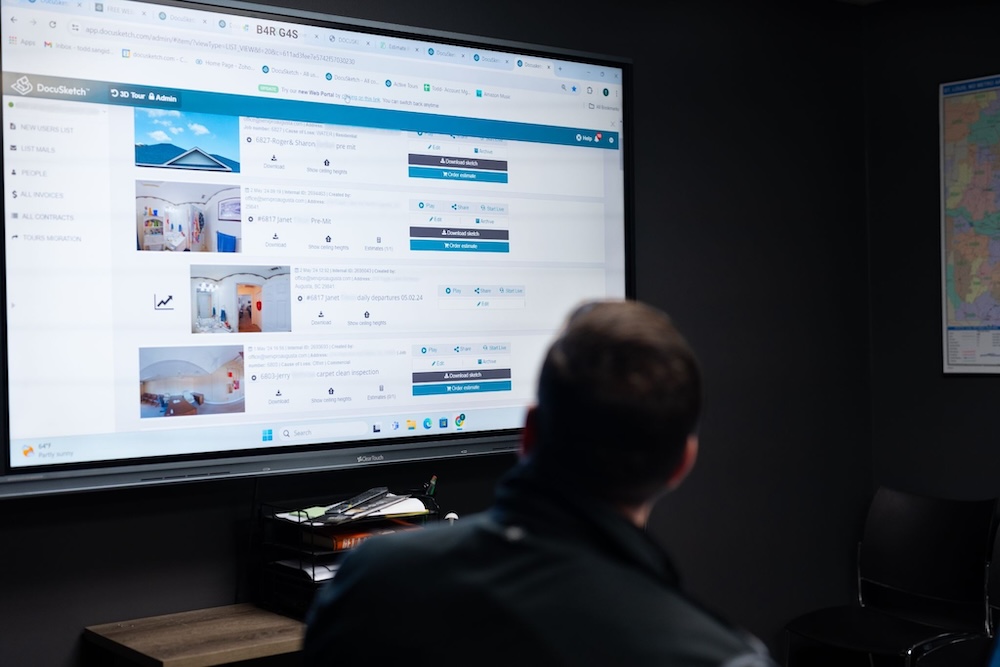
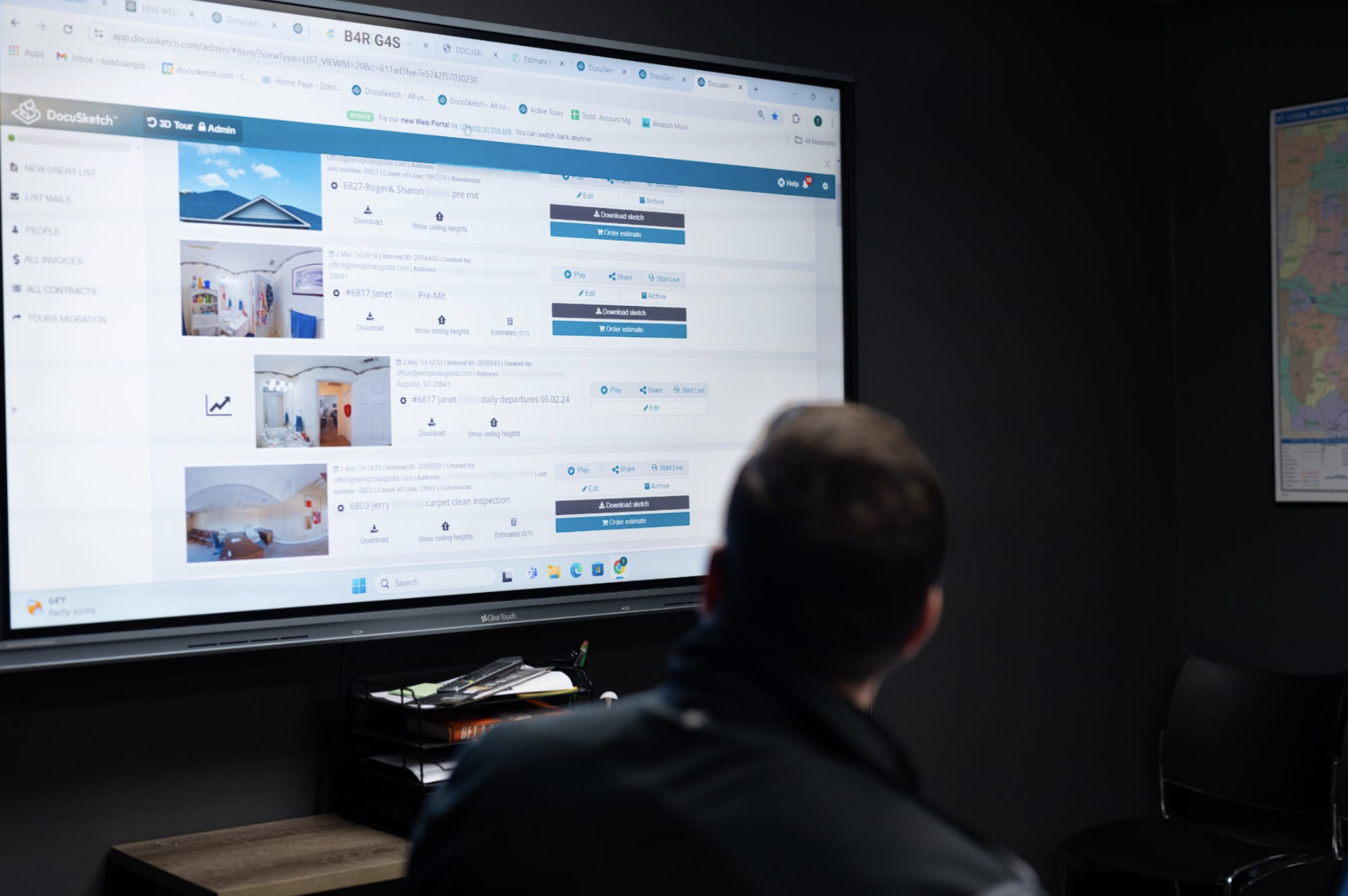
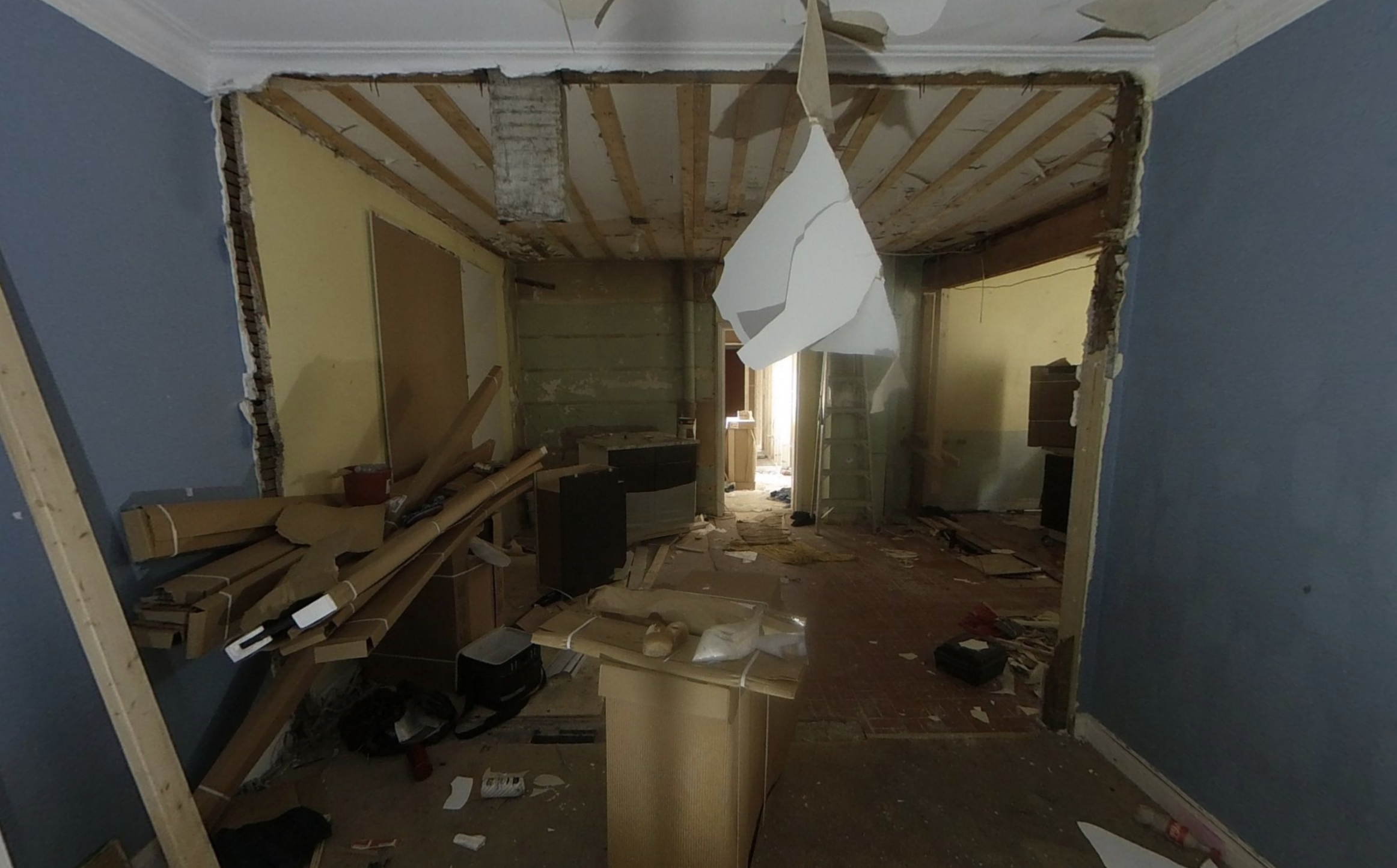
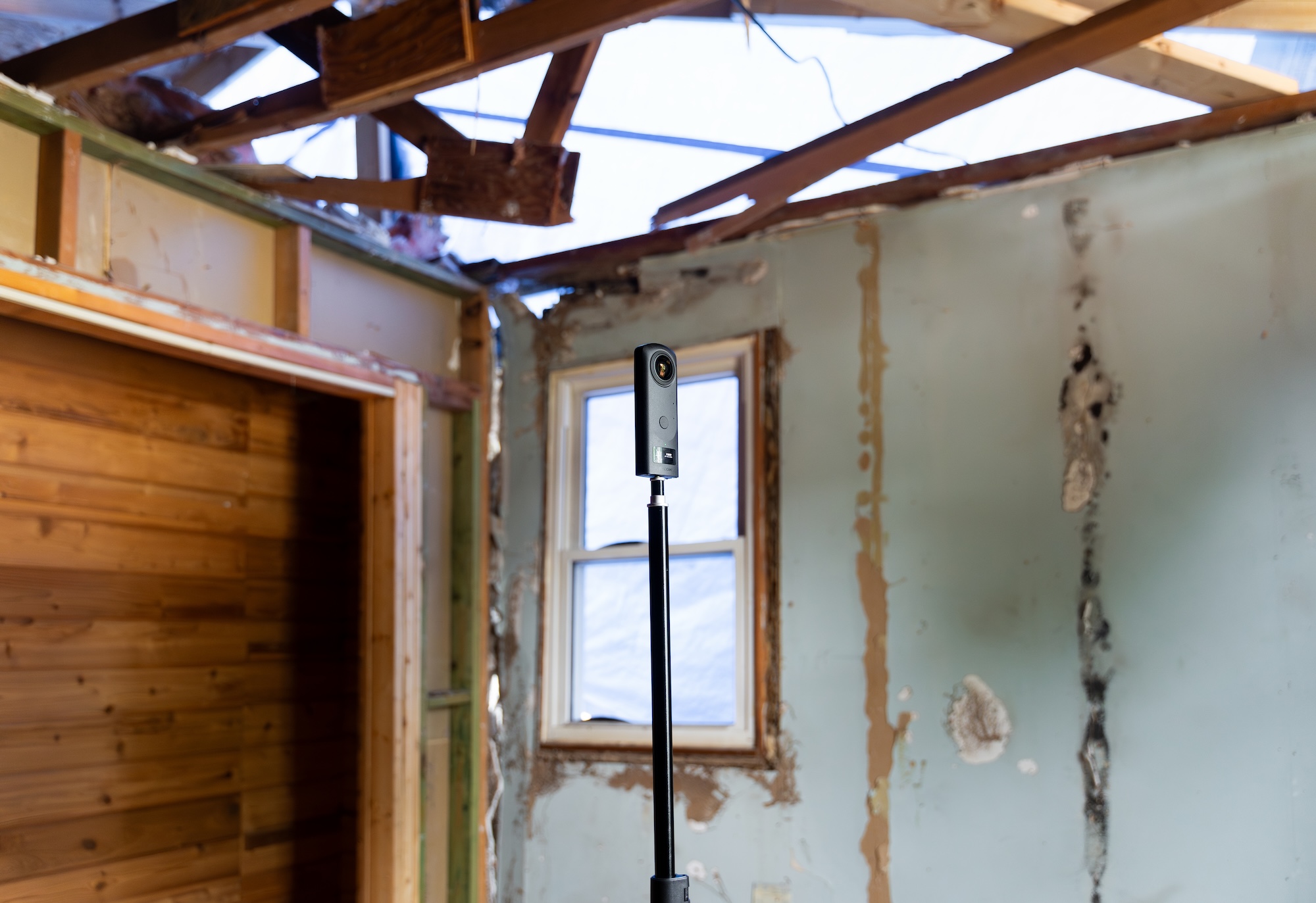
On documentation, Robb states that under optimal conditions, every property a contractor works with regularly should already have a complete 360-degree tour on file—exterior access points, utility shutoffs, contractor staging areas, mechanical systems, and known service vendors. That level of pre-loss familiarity with a building becomes a significant operational advantage when a CAT event hits.
"That small step is often a huge difference-maker in achieving true progress and completing impactful work as quickly as possible," Harrell says.
If pre-loss documentation hasn't been completed before the storm, Robb recommends capturing it as one of the first actions on-site—in coordination with safety preparations and the plan of action. A complete initial tour can also serve as a shared reference at a command post, giving the full team a common visual of the property.
On estimating, Chris frames the challenge as a workflow operationalization problem. When job volume spikes, you can't afford a learning curve. Every project manager on the team should have submitted real files under normal conditions—actual jobs with real turnaround and real feedback.
The same logic applies to file completeness. If there are gaps in what a complete file looks like from your team, Chris recommends closing them before demand spikes, not during it. An incomplete file costs more than time: it forces the estimator to stop, ask, and wait—which stretches cycle time on both ends.
Communication channels should also be established now. When an estimator has a question during a surge, every minute spent waiting on an answer is a minute the estimate isn't moving.
Manage the First 72 Hours with Structure, Not Speed
When a hurricane makes landfall, the phone starts ringing and doesn't stop. Todd's framework for the first 72 hours comes down to one principle: being as organized as possible before the calls come in.
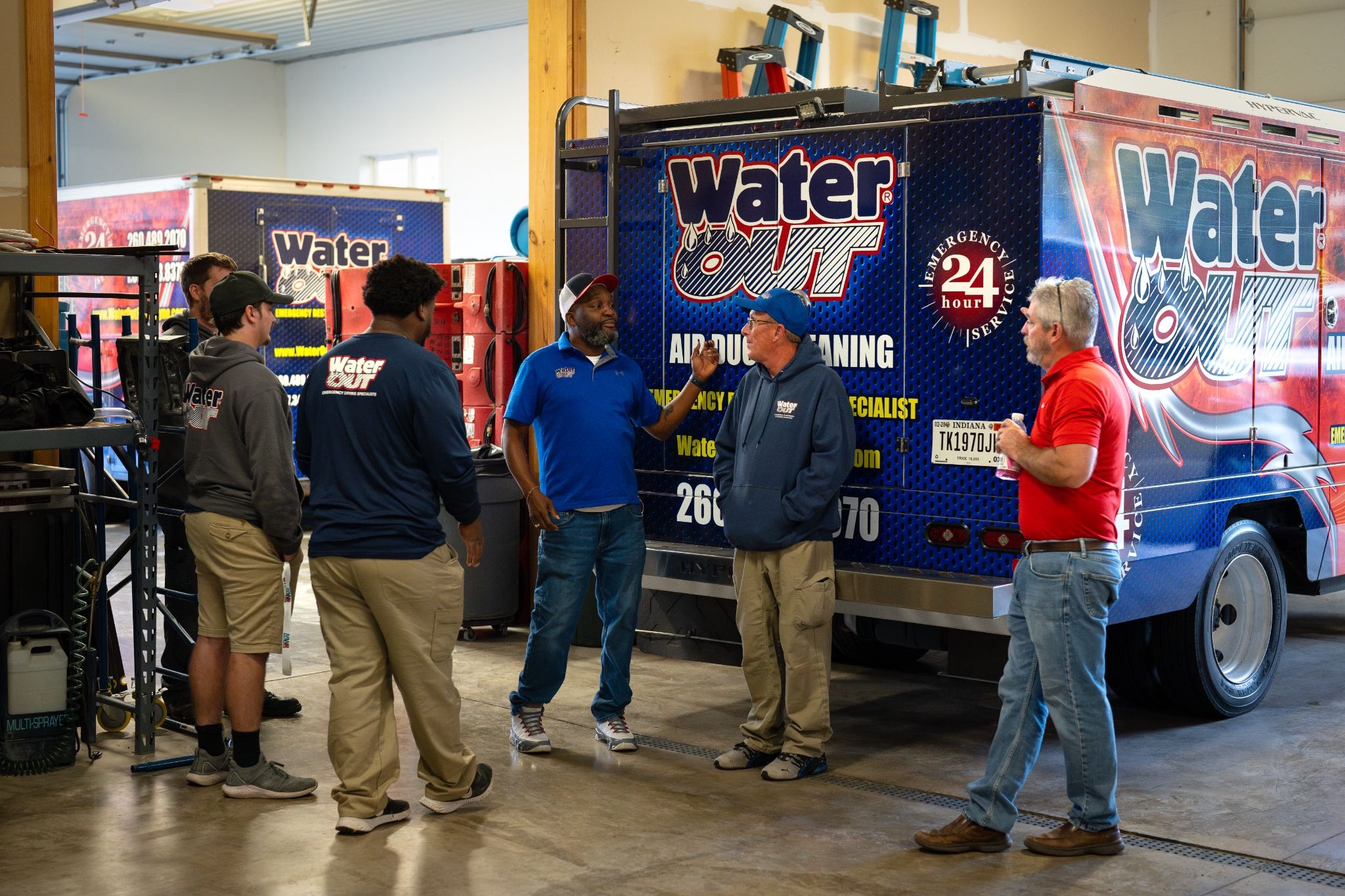
Stand up a command center immediately. Every call, every loss, and every decision should route through a single central point. Roles need to be defined from the start: triage lead, intake, dispatch, field coordination, customer communication, carrier communication, and documentation oversight. "If roles aren't clear, things will get missed," Todd explains, "and missed items in the first 72 hours turn into major problems later."
Answer every call and set expectations. If the operation is at capacity, say so. If there's a wait, be honest about it.
Build a visual job board. Whether it's a whiteboard, sticky notes, or a digital tool, every person in the command center should be able to see every active job and what it needs. Visibility keeps the team aligned and prevents work from falling through the gaps.
Know your prioritization hierarchy. Not all emergencies are equal, and asking a team to treat them as if they are produces chaos. A reasonable framework, according to Todd: team and their families come first, followed by immediate emergency response, direct referral partners, and TPA assignments if applicable. Communicating that hierarchy clearly lets the team make decisions with confidence rather than escalating everything.
Tag everything in your CRM correctly from the start. The decisions made in the first 72 hours directly affect cash flow, cycle time, and operational efficiency over the next 30 to 60 days. Getting intake data right—location, severity, loss type, source—where you manage your incoming call data is the foundation this season is built on.
Keep Documentation and Estimates Moving at Volume
Under surge conditions, documentation is where teams most often cut corners—and where they pay for it later.
Robb emphasizes that the first capture of a loss is the most valuable one. Once demolition begins, equipment gets placed, or contents are moved, the original conditions start to disappear. Thorough documentation means capturing the entire structure: not just the visible damage, but hallways, transitions, unaffected rooms, access paths, and environmental conditions. All of it tells the story of the loss and supports a defensible scope later.
That defensible scope, Robb notes, consistently comes down to four questions:
- What is the product?
- What is the quality?
- What is the quantity?
- What is the repair methodology?
When field documentation clearly answers those four questions, estimating moves faster and approvals encounter less friction.
Chris extends this thinking to the estimating workflow itself. For contractors managing high claim volumes, centralized estimating becomes a capacity tool. Crews can capture scope on-site and submit files while still in the field, trusting that estimates are being written while they move to the next property. That model only works, though, if the files coming in are complete.
The stakes here are significant. According to a DocuSketch survey, the average cost of storm damage recovery is $12,315—a figure only 17% of homeowners could cover out of pocket. Slow estimates create operational backlogs, but they also extend the time a family is displaced. Speed and accuracy in the estimating process are both operational and human imperatives.
One often-overlooked form of documentation is outreach history. If a client pushes back on an estimate months later, a record of questions asked, gaps flagged, and follow-ups sent tells a different story than an estimate with no communication trail behind it. "Document your communication the same way you document your scope," Chris explains, "because when a dispute comes up three months later, one is just as important as the other."
After the Storm: The Debrief That Builds Next Season
The work doesn't end when the last job closes. Robb points to post-event debriefing as one of the most overlooked parts of hurricane response—and one of the most valuable investments a restoration company can make.
Reviewing operational bottlenecks, estimate revision trends, cycle times, communication breakdowns, and field challenges after a CAT event is how organizations actually improve. The gaps that showed up under pressure this season don't have to show up the same way next time.
"If you really think about it," Robb says, "hurricane preparedness is about building systems, workflows, and documentation standards that can continue to perform under pressure when demand, complexity, and emotional stress are all elevated simultaneously."
The Preparation Is the Response
The frameworks addressed above offer an opportunity to see what changes you can make to your systems right now. For the most part, bottlenecks aren’t created by CAT events; the surge just made the cost of them impossible to ignore. And for the families on the other end of every claim, they feel the difference when an operation has those systems in place.
If you’d like to see how immersive documentation and faster workflows can support your team, book a demo to learn more about DocuSketch.
Every hurricane season, restoration teams are faced with difficult conditions and overloaded capacity. Being prepared is a step in the right direction to get a policyholder back in their home in a timely manner. Setting up processes ahead can help ensure files are complete in time, estimates move, and families get back into their homes.
"If your systems and processes weren't dialed in before the storm, you're going to feel it," said Todd Sangid, from DocuSketch. "Every gap in your operation gets exposed at volume, under pressure, when people are counting on you."
That observation cuts to the heart of how efficiency rarely comes down to truck count or headcount. It comes down to the structures built before the first calls come in.
We chatted with three DocuSketch experts Robb Harrell, Todd Sangid and Chris Tilkov to cover: what to have in place before the storm, how to manage the first 72 hours, and how to keep documentation and estimates moving at volume.
Build the Systems You'll Need at Volume Before the Storm
The prep work that separates scalable operations from reactive ones happens well before hurricane season starts. Two areas stand out as most commonly underdeveloped: pre-loss documentation and estimating workflows.
On documentation, Robb states that under optimal conditions, every property a contractor works with regularly should already have a complete 360-degree tour on file—exterior access points, utility shutoffs, contractor staging areas, mechanical systems, and known service vendors. That level of pre-loss familiarity with a building becomes a significant operational advantage when a CAT event hits.
"That small step is often a huge difference-maker in achieving true progress and completing impactful work as quickly as possible," Harrell says.
If pre-loss documentation hasn't been completed before the storm, Robb recommends capturing it as one of the first actions on-site—in coordination with safety preparations and the plan of action. A complete initial tour can also serve as a shared reference at a command post, giving the full team a common visual of the property.
On estimating, Chris frames the challenge as a workflow operationalization problem. When job volume spikes, you can't afford a learning curve. Every project manager on the team should have submitted real files under normal conditions—actual jobs with real turnaround and real feedback.
The same logic applies to file completeness. If there are gaps in what a complete file looks like from your team, Chris recommends closing them before demand spikes, not during it. An incomplete file costs more than time: it forces the estimator to stop, ask, and wait—which stretches cycle time on both ends.
Communication channels should also be established now. When an estimator has a question during a surge, every minute spent waiting on an answer is a minute the estimate isn't moving.
Manage the First 72 Hours with Structure, Not Speed
When a hurricane makes landfall, the phone starts ringing and doesn't stop. Todd's framework for the first 72 hours comes down to one principle: being as organized as possible before the calls come in.
Stand up a command center immediately. Every call, every loss, and every decision should route through a single central point. Roles need to be defined from the start: triage lead, intake, dispatch, field coordination, customer communication, carrier communication, and documentation oversight. "If roles aren't clear, things will get missed," Todd explains, "and missed items in the first 72 hours turn into major problems later."
Answer every call and set expectations. If the operation is at capacity, say so. If there's a wait, be honest about it.
Build a visual job board. Whether it's a whiteboard, sticky notes, or a digital tool, every person in the command center should be able to see every active job and what it needs. Visibility keeps the team aligned and prevents work from falling through the gaps.
Know your prioritization hierarchy. Not all emergencies are equal, and asking a team to treat them as if they are produces chaos. A reasonable framework, according to Todd: team and their families come first, followed by immediate emergency response, direct referral partners, and TPA assignments if applicable. Communicating that hierarchy clearly lets the team make decisions with confidence rather than escalating everything.
Tag everything in your CRM correctly from the start. The decisions made in the first 72 hours directly affect cash flow, cycle time, and operational efficiency over the next 30 to 60 days. Getting intake data right—location, severity, loss type, source—where you manage your incoming call data is the foundation this season is built on.
Keep Documentation and Estimates Moving at Volume
Under surge conditions, documentation is where teams most often cut corners—and where they pay for it later.
Robb emphasizes that the first capture of a loss is the most valuable one. Once demolition begins, equipment gets placed, or contents are moved, the original conditions start to disappear. Thorough documentation means capturing the entire structure: not just the visible damage, but hallways, transitions, unaffected rooms, access paths, and environmental conditions. All of it tells the story of the loss and supports a defensible scope later.
That defensible scope, Robb notes, consistently comes down to four questions:
- What is the product?
- What is the quality?
- What is the quantity?
- What is the repair methodology?
When field documentation clearly answers those four questions, estimating moves faster and approvals encounter less friction.
Chris extends this thinking to the estimating workflow itself. For contractors managing high claim volumes, centralized estimating becomes a capacity tool. Crews can capture scope on-site and submit files while still in the field, trusting that estimates are being written while they move to the next property. That model only works, though, if the files coming in are complete.
The stakes here are significant. According to a DocuSketch survey, the average cost of storm damage recovery is $12,315—a figure only 17% of homeowners could cover out of pocket. Slow estimates create operational backlogs, but they also extend the time a family is displaced. Speed and accuracy in the estimating process are both operational and human imperatives.
One often-overlooked form of documentation is outreach history. If a client pushes back on an estimate months later, a record of questions asked, gaps flagged, and follow-ups sent tells a different story than an estimate with no communication trail behind it. "Document your communication the same way you document your scope," Chris explains, "because when a dispute comes up three months later, one is just as important as the other."
After the Storm: The Debrief That Builds Next Season
The work doesn't end when the last job closes. Robb points to post-event debriefing as one of the most overlooked parts of hurricane response—and one of the most valuable investments a restoration company can make.
Reviewing operational bottlenecks, estimate revision trends, cycle times, communication breakdowns, and field challenges after a CAT event is how organizations actually improve. The gaps that showed up under pressure this season don't have to show up the same way next time.
"If you really think about it," Robb says, "hurricane preparedness is about building systems, workflows, and documentation standards that can continue to perform under pressure when demand, complexity, and emotional stress are all elevated simultaneously."
The Preparation Is the Response
The frameworks addressed above offer an opportunity to see what changes you can make to your systems right now. For the most part, bottlenecks aren’t created by CAT events; the surge just made the cost of them impossible to ignore. And for the families on the other end of every claim, they feel the difference when an operation has those systems in place.
If you’d like to see how immersive documentation and faster workflows can support your team, book a demo to learn more about DocuSketch.

Related Articles