A Strategic Guide to Increasing Restoration Company Sales

5 min read
The restoration industry is experiencing a shift in how companies generate and convert sales opportunities. For contractors who previously relied on steady referral relationships and emergency calls, the last two years have required a complete rethinking of sales strategy. Claims volume fluctuations, increased competition from private equity-backed consolidation, and changing insurance carrier programs mean that passive approaches to business development no longer work.
This guide breaks down the strategic fundamentals that separate growing restoration companies from stagnant ones; covering everything from lead generation and documentation quality to training field staff and measuring what matters.
Why Restoration Sales Are Getting More Competitive
According to Ben Justesen of DocuSketch, the market has fundamentally changed in recent years.
"When I sold my company three years ago, we were on such a huge upward trend," Ben explains. "But the last two years have been tough. Claims volume dropped. Companies that never had to think about sales are suddenly scrambling."
Several factors are intensifying competition:
Private equity consolidation has created regional platforms with professional management systems and economies of scale that independent contractors struggle to match.
Independent contractors often face unique challenges when competing for visibility. National franchises have established brand recognition and substantial marketing resources, which means independent restoration businesses need to work harder to establish their local presence and build trust within their communities.
Insurance carrier programs are tightening their preferred vendor networks, creating pressure to accept lower margins in exchange for work volume.
Technology disruption is changing how restoration work gets documented, estimated, and managed, creating both threats and opportunities for contractors willing to adapt.
The companies thriving in this environment share common characteristics: they've pivoted to proactive sales strategies, improved operational efficiency through technology, and invested in building relationships rather than cutting resources out of fear. If you're looking to build a sustainable foundation for growth, understanding how to grow your restoration business strategically is more important now than ever.
What Restoration Buyers Care About (And What Stops Them from Choosing You)
Understanding buyer priorities can help inform more effective restoration sales strategies. The challenge? Most potential customers don't even know restoration companies exist.
According to industry research, only 19% of homeowners are familiar with restoration contractors. When disaster strikes at 2 a.m., most people call their insurance company first, not a restoration contractor.
What Homeowners Want
When homeowners do work with restoration contractors, research and industry observations suggest their priorities often include:
Speed and responsiveness: Emergency response time can make or break a job. Homeowners experiencing water damage or fire loss are typically in crisis mode and need immediate help.
Clear communication: Property owners are often traumatized and overwhelmed. They may need someone who can explain the process clearly, set realistic expectations, and keep them informed throughout the project.
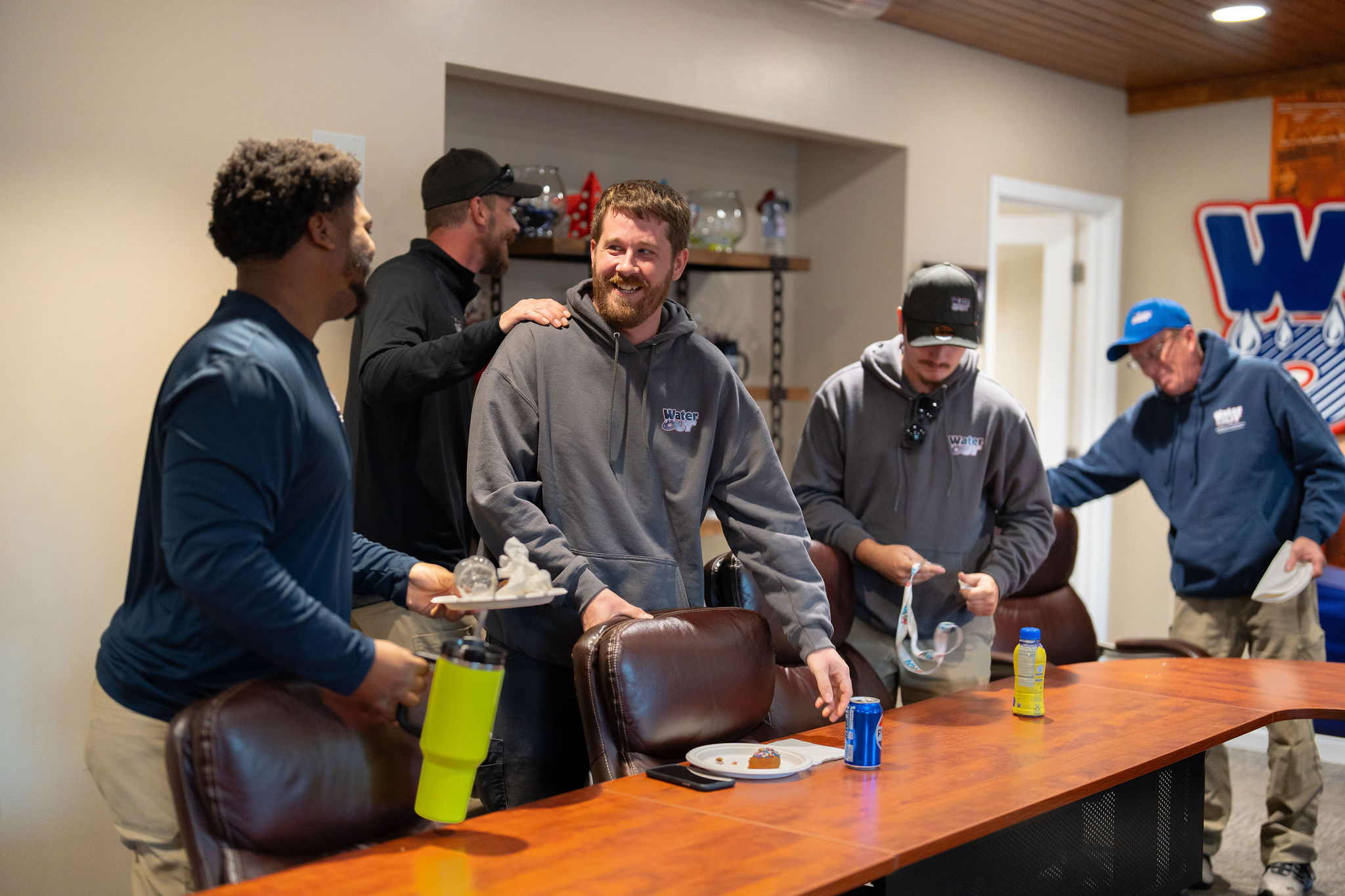
Trust and professionalism: Building trust starts with demonstrating competence from the first interaction. This means showing up on time, communicating clearly about next steps, following through on commitments, and maintaining a professional appearance and demeanor throughout the project.
What Insurance Carriers Need
Carriers typically have different priorities that can impact a contractor's ability to close jobs:
- Comprehensive documentation with defensible records that justify scope and cost
- Accurate, detailed estimates with minimal surprises or missing line items
- Speed to help close claims quickly
Understanding both homeowners and adjusters can help reveal where sales opportunities might exist and where many contractors fall short.
5 Pillars of Restoration Sales Growth
Based on insights from restoration professionals and DocuSketch's work with contractors across the country, sustainable sales growth often involves strategic focus across five key areas:
1. Lead Generation and Referral Networks
Restoration work often flows through relationships, and making sure your company is top of mind when someone needs you, which raises an important question: are you actively building them or passively hoping they hold?
Insurance partnerships remain critical. Rather than simply dropping off cookies at insurance offices, many contractors find value in demonstrating tangible value through approaches like scheduling lunch-and-learns to showcase documentation capabilities and claim cycle times.
According to Holly Baldwin from DocuSketch, contractors should consider offering educational support: "If a restoration company goes above and beyond to help educate the homeowner on their coverage, that makes them stand out. The insurance company will want to use you more because you're taking care of their customer."
Strategic referral partnerships extend beyond insurance. Plumbers, realtors, property managers, and general contractors all encounter damage before it becomes a full restoration job. For more on developing these relationships effectively, explore proven restoration company marketing strategies.
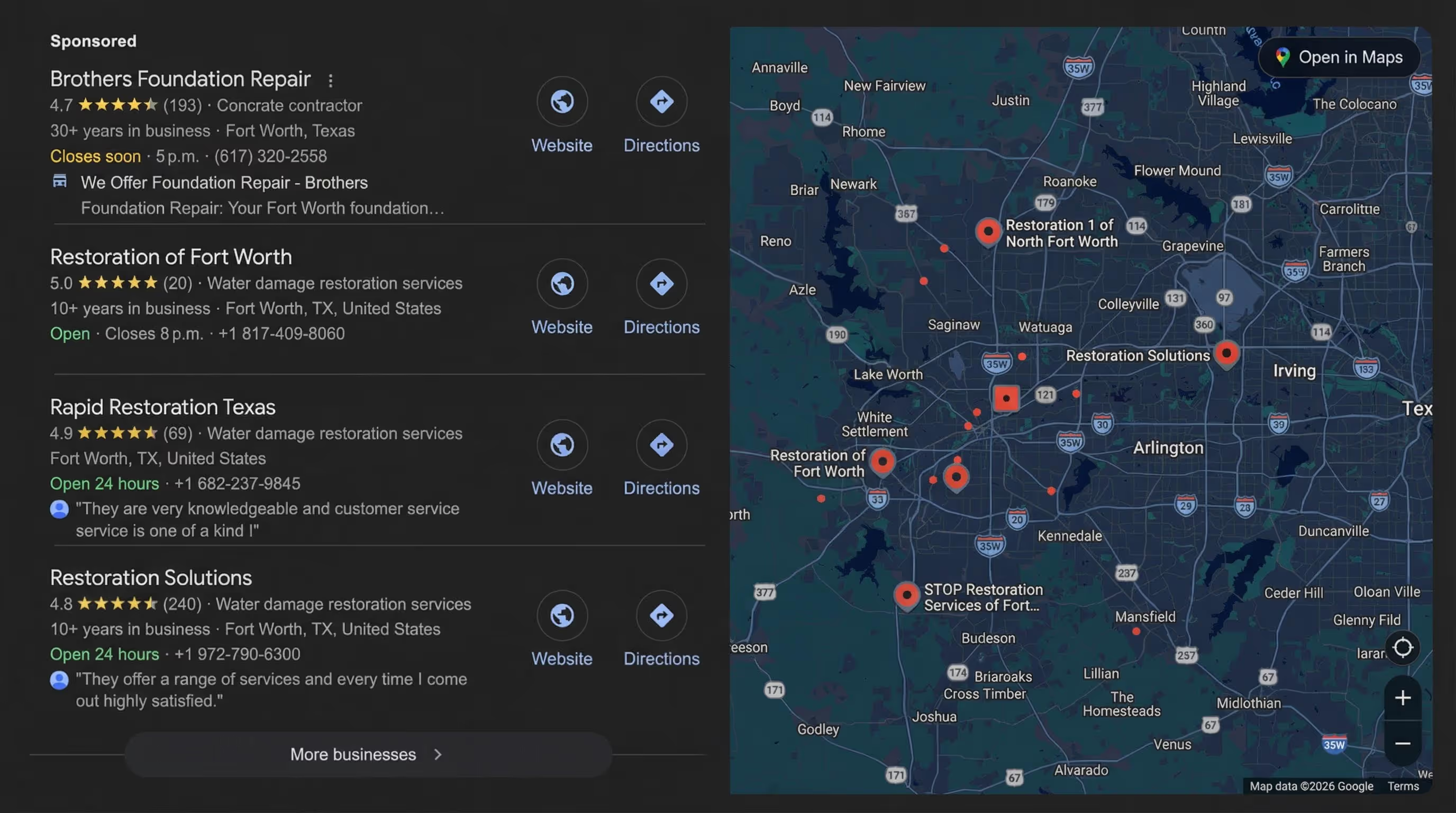
Local SEO and digital presence can matter more than many contractors realize. Local Search Engine Optimization, or SEO, refers to the strategies that help your business appear in Google search results when people in your area look for restoration services. This includes optimizing your Google Business profile with accurate business information, photos, and service descriptions; actively requesting reviews from satisfied customers to build credibility; ensuring your website appears for relevant local searches; and making it easy for someone in crisis to find you immediately when they search for emergency restoration help. When a homeowner's basement floods at 2 a.m., being the first credible result they see can be the difference between winning and losing that job.
READ MORE: Where to get the best water damage leads for your restoration business
2. Response Time and Customer Experience
Speed alone doesn't win jobs but many contractors find that responsiveness combined with excellent communication does.
Ben notes that speed of estimate delivery is particularly critical for remodel work: "Homeowners have a budget. They want to know what it costs. They want to start planning. The contractor who gets them that estimate first has a massive advantage."
Companies that excel at customer experience often focus on 24/7 emergency response, clear communication about timelines, regular project updates, proactive problem-solving, and follow-up after completion.
3. Documentation and Estimate Quality
Professional documentation serves a dual purpose: it's both an operational necessity and a powerful sales differentiator.
When contractors show up with 360° documentation technology, they immediately signal a higher level of professionalism. When estimates arrive in hours rather than days, they win competitive bids.
"The customer looks at how well you contact them, stay in contact, and it's just impressive when you can get back to them right away with that estimate," Ben explains. "Too many contractors do not do that. They take too long, and then they think of that stereotypical contractor—can I trust this person to do my project?"
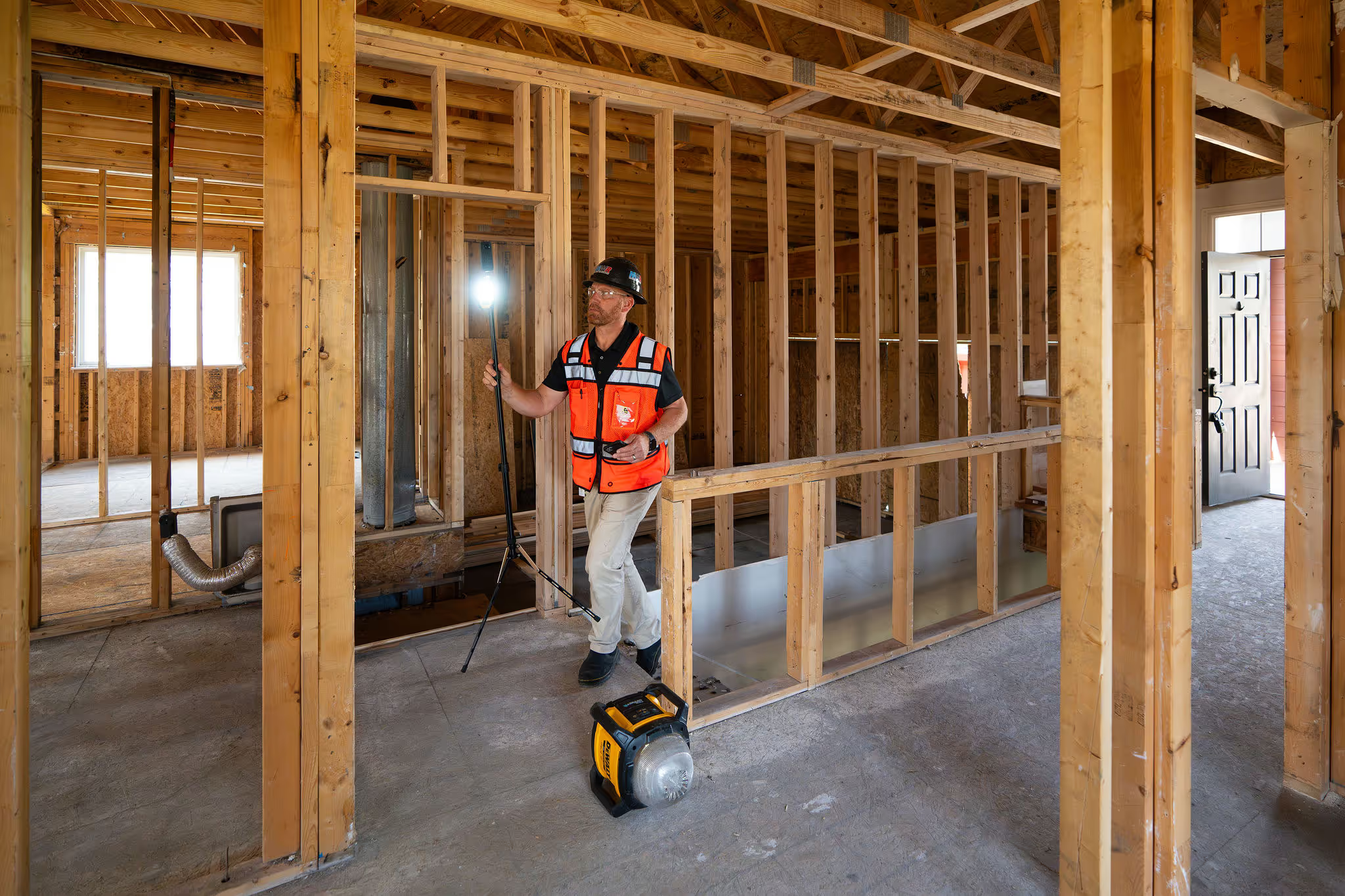
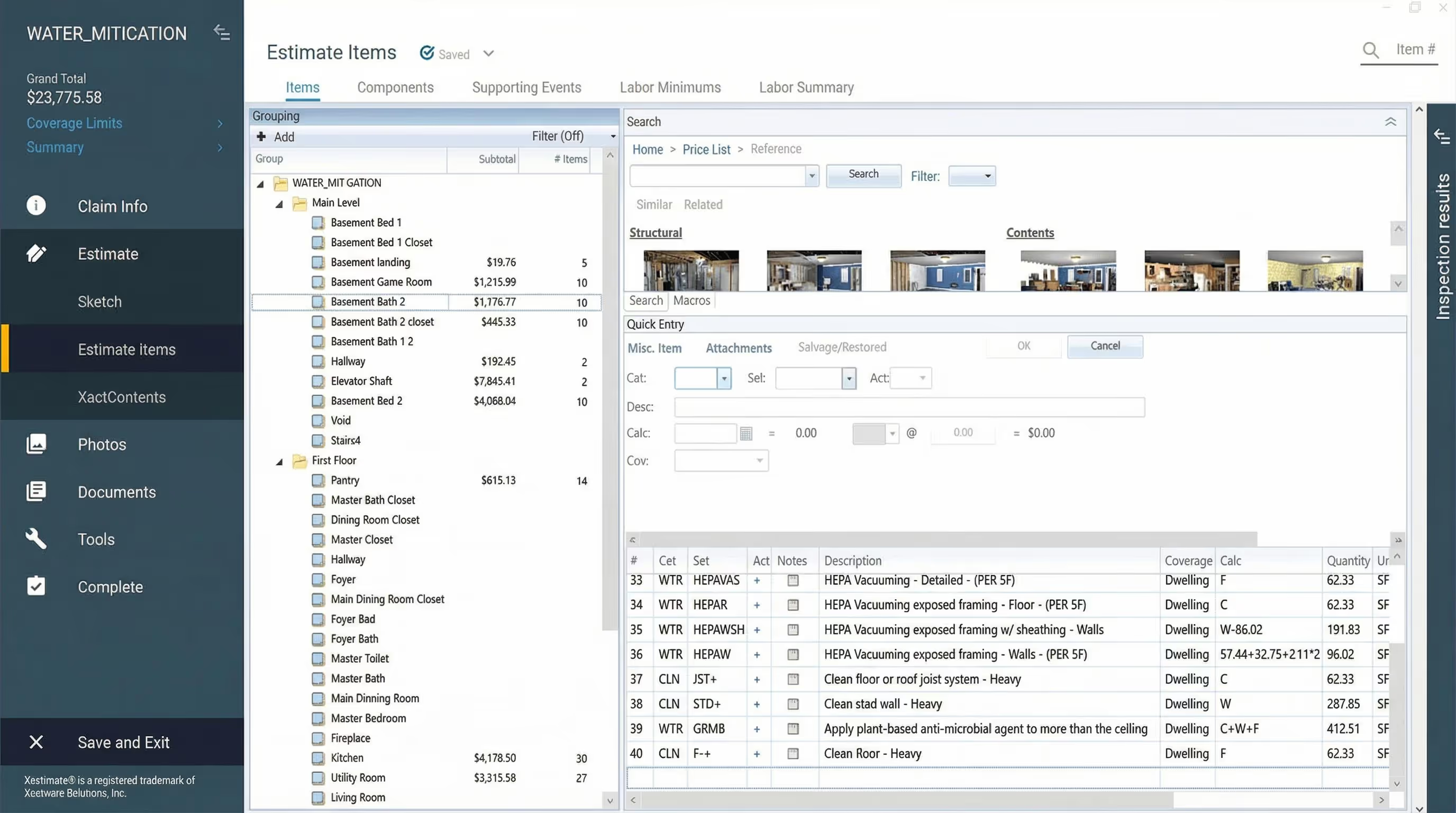
Ben recently spoke with a small contractor doing $1-2 million annually who was wearing all operational hats. By leveraging DocuSketch Estimating, the contractor reduced estimating costs to approximately one-third the cost of hiring a full-time estimator while receiving estimates in a fraction of the time.
GO FURTHER: See a full Xactimate estimate sample - from sketch to line items
4. Upselling and Expanding Scope
Ensuring you’re paid for the work you do is a part of sales.
Many restoration contractors leave significant revenue on the table because their technicians don't recognize secondary damage, don't feel comfortable discussing it with homeowners, or fail to document it properly.
Train your team to identify all damage and communicate findings effectively. Effective training programs often include:
- Teaching technicians to recognize common secondary damage patterns
- Providing scripts for communicating findings to homeowners
- Creating documentation standards that capture all affected areas
- Emphasizing that thorough restoration can help prevent future problems
5. Tracking and Improving Sales Performance
Data-driven sales management often helps separate growing companies from stagnant ones.
Metrics that many successful contractors track include:
Lead source and volume: Where are leads coming from? Which sources convert best?
Close rate: What percentage of estimates convert to jobs? Low close rates indicate pricing issues, trust problems, or poor lead qualification.
Revenue per job: Are you capturing the full scope of work, or consistently missing damage?
Time from lead to estimate: How quickly do you move from initial contact to estimate delivery? Speed wins competitive bids.
Estimate approval rate: How often do adjusters approve your estimates without pushback?
Using a CRM system to track pipeline and setting clear KPIs can help. Popular job management platforms in the restoration industry include PSA, Dash by Cotality, and Xcelerate, which offer CRM capabilities alongside project management. Set clear KPIs. Review metrics weekly to identify patterns and adjust strategy.
READ MORE: Restoration management software: types, tools, and what to look for
Key Mistakes That Stall Restoration Sales
Even experienced restoration contractors make predictable mistakes that limit sales growth:
Lack of lead follow-up systems: A prospect calls, you send an estimate, then nothing. No check-in. No follow-up call. The assumption that interested customers will call back leaves substantial revenue on the table.
Inconsistent estimate quality: When one estimator produces detailed, accurate scopes while another rushes through and misses critical items, your reputation suffers.
Field staff who don't understand their role in sales: Technicians interact with customers more than anyone else on your team. Poor communication or failure to identify additional damage directly impacts referrals and repeat business.
Slow response and estimate delivery: While you're taking three days to respond, your competitor has already submitted their estimate and built rapport with the customer.
How Technology Can Boost Sales in a Service-Based Business
Technology adoption in restoration creates measurable competitive advantages—but only when contractors focus on tools that directly impact sales and efficiency.
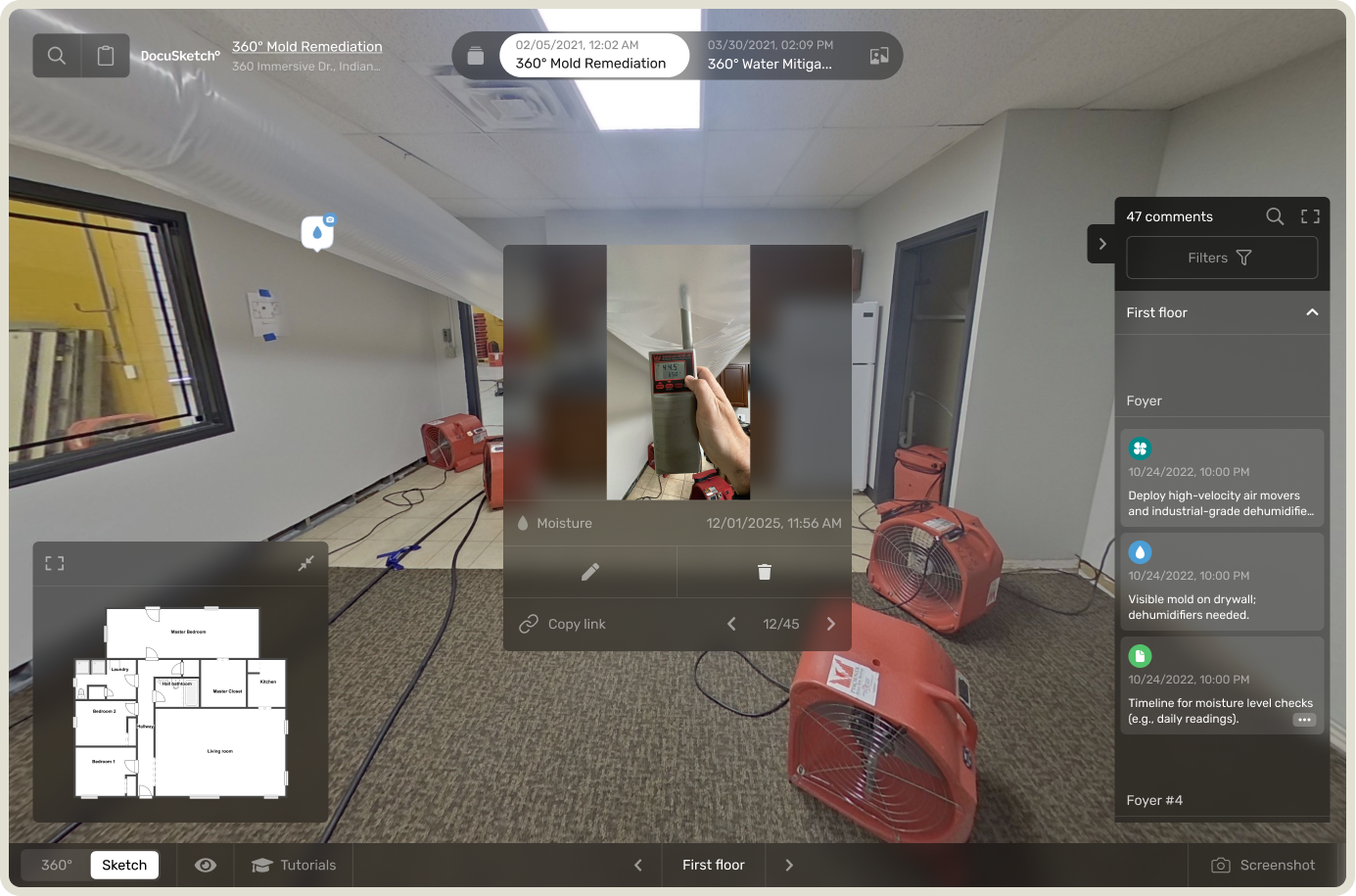
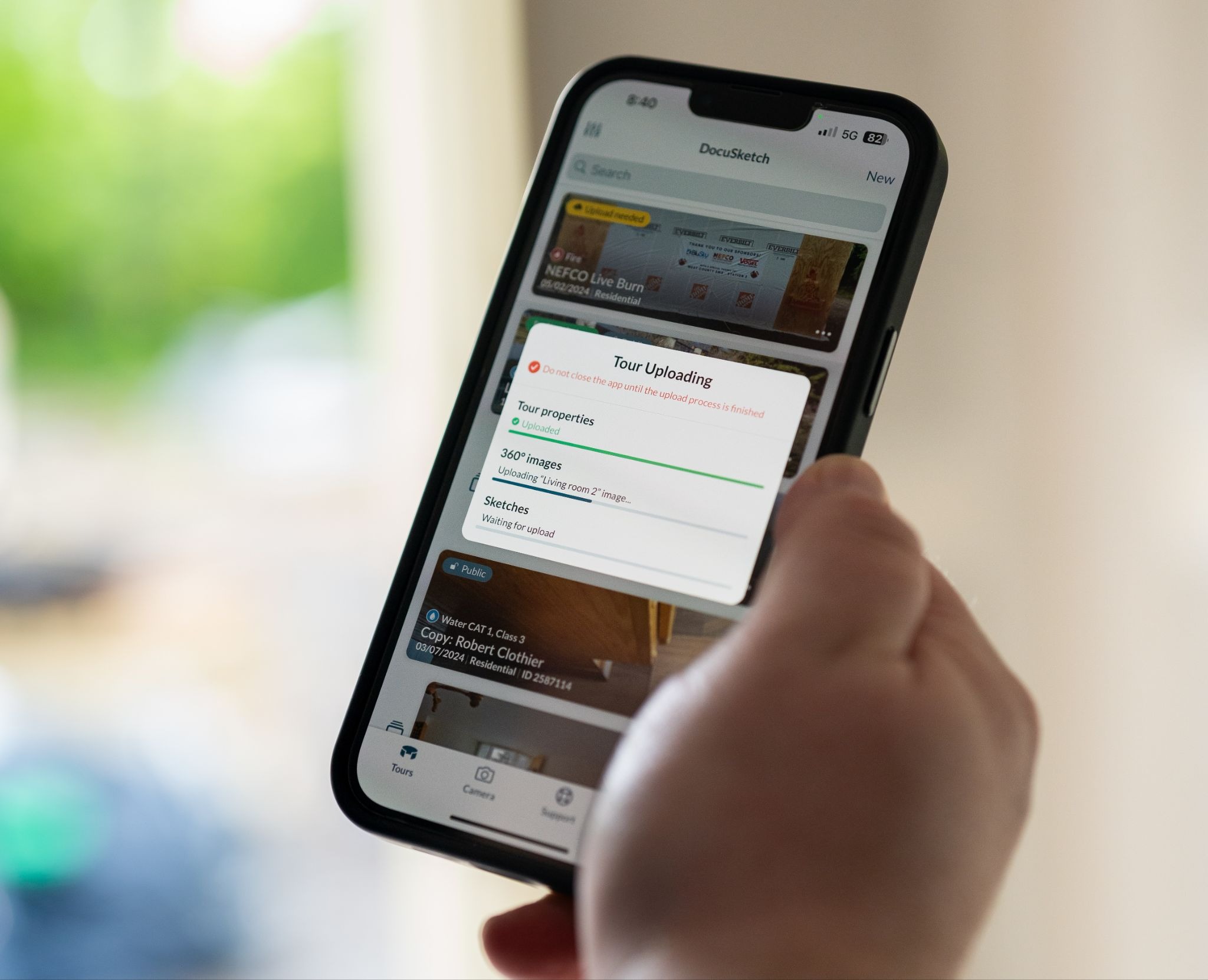
Ben, speaking from his experience as a former restoration company owner, emphasizes the sales impact of professional DocuSketch: "When you pull out a 360° camera instead of your phone, when you can show a homeowner or an adjuster a complete virtual tour of the property, when your estimates come back in hours instead of days—you stand out."
How DocuSketch can help you sell
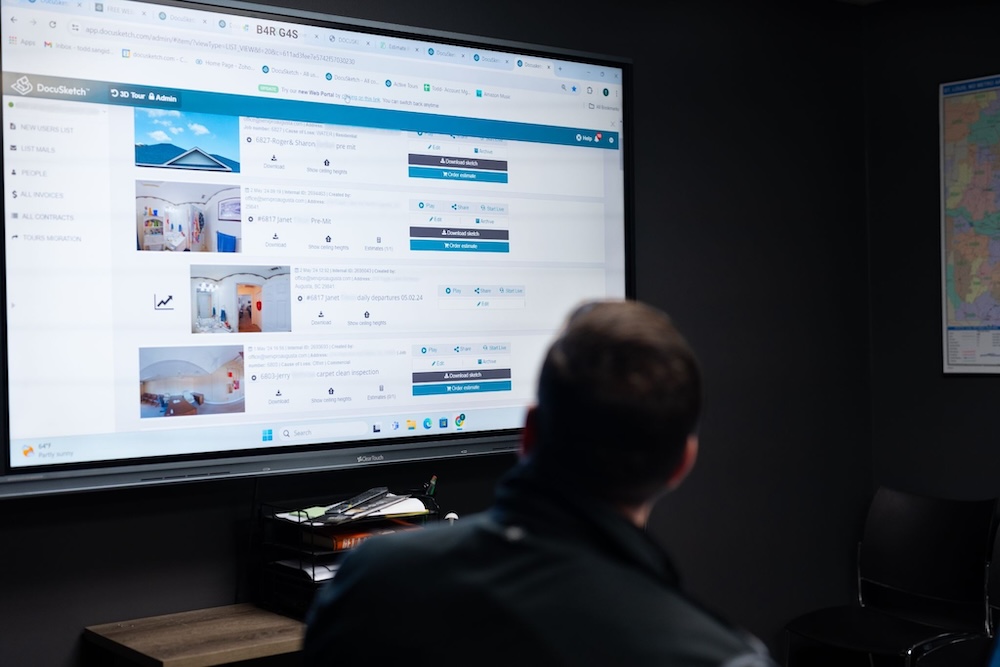
Increased professionalism: High-quality visual documentation can immediately differentiate you from competitors using smartphone photos.
Faster cycle times: Reducing on-site documentation time by up to 90% can mean project managers spend more time building relationships and closing deals.
Higher estimate accuracy: Comprehensive documentation may help reduce missed damage and change orders, potentially leading to better estimate approval rates.
Improved adjuster relationships: When adjusters can virtually inspect properties through 360° tours, they may spend less time requesting additional information.
How to Train Restoration Staff to Think Like Salespeople
Every team member who interacts with customers plays a role in sales, whether they realize it or not.
The difference between technicians who contribute to sales growth and those who don't often comes down to three things:
Communication Skills: Can your field staff clearly explain what they're doing and why it matters? Do they set appropriate expectations?
Problem Identification: Can your technicians recognize additional damage beyond the obvious? Do they document secondary issues?
Trust Building: Do homeowners feel confident in your team's competence? Does your team's demeanor reduce customer anxiety or increase it?
The goal isn't to turn mitigation technicians into aggressive salespeople. Many contractors find success by helping team members understand how their professionalism, communication, and follow-through can directly impact referrals, reviews, and repeat business.
Metrics to Watch When Trying to Grow Sales
Many successful restoration sales strategies involve disciplined measurement and continuous improvement:
Close Rate: What percentage of estimates convert to jobs? Track by lead source to identify which channels produce the best prospects.
Revenue Per Job: Are you consistently capturing full project scope? Revenue per job trends reveal whether your documentation and estimating processes are comprehensive enough.
Lead-to-Estimate Cycle Time: In competitive bidding situations, the contractor who delivers estimates fastest often wins. Track this metric by job type and estimator.
Estimate Approval Rate: Frequent disputes suggest accuracy problems or misalignment with carrier requirements.
Tracking these metrics consistently using CRM systems and job management software can be helpful. The restoration industry commonly uses platforms like PSA, Dash by Cotality, and Xcelerate to manage operations and track sales performance. Many contractors review trends monthly and investigate root causes when patterns emerge.
Moving Forward: A Realistic Approach to Sales Growth
Sustainable sales growth in restoration requires executing fundamental strategies consistently and measuring results honestly, not chasing silver bullets or expecting overnight transformations.
Ben emphasizes the importance of mindset in challenging markets: "The companies that do well in tough markets aren't the ones with perfect systems. They're the ones who truly believe that it's going to work out, who set clear goals, and who work the plan even when it's hard."
Immediate Actions for Sales Growth
For contractors targeting significant sales growth, these fundamentals can serve as a starting point:
Audit your response times: Even small improvements in speed can create competitive advantages.
Evaluate your documentation process: Consider whether you're creating professional-quality documentation that could serve as a sales differentiator.
Review your relationship-building strategy: Reflect on when you last had lunch with your key insurance partners and whether you're visible in your market.
Implement basic sales tracking: Measuring key metrics can help you understand what's working.
Train your team on their role in sales: Help technicians and project managers understand how their communication and professionalism can impact referrals.
For contractors just getting started in the industry, understanding how to start a restoration business with these sales fundamentals in mind sets a strong foundation for growth.
The companies that execute these fundamentals consistently may not just survive the current market, they could emerge stronger and more profitable than before.
The restoration industry is experiencing a shift in how companies generate and convert sales opportunities. For contractors who previously relied on steady referral relationships and emergency calls, the last two years have required a complete rethinking of sales strategy. Claims volume fluctuations, increased competition from private equity-backed consolidation, and changing insurance carrier programs mean that passive approaches to business development no longer work.
This guide breaks down the strategic fundamentals that separate growing restoration companies from stagnant ones; covering everything from lead generation and documentation quality to training field staff and measuring what matters.
Why Restoration Sales Are Getting More Competitive
According to Ben Justesen of DocuSketch, the market has fundamentally changed in recent years.
"When I sold my company three years ago, we were on such a huge upward trend," Ben explains. "But the last two years have been tough. Claims volume dropped. Companies that never had to think about sales are suddenly scrambling."
Several factors are intensifying competition:
Private equity consolidation has created regional platforms with professional management systems and economies of scale that independent contractors struggle to match.
Independent contractors often face unique challenges when competing for visibility. National franchises have established brand recognition and substantial marketing resources, which means independent restoration businesses need to work harder to establish their local presence and build trust within their communities.
Insurance carrier programs are tightening their preferred vendor networks, creating pressure to accept lower margins in exchange for work volume.
Technology disruption is changing how restoration work gets documented, estimated, and managed, creating both threats and opportunities for contractors willing to adapt.
The companies thriving in this environment share common characteristics: they've pivoted to proactive sales strategies, improved operational efficiency through technology, and invested in building relationships rather than cutting resources out of fear. If you're looking to build a sustainable foundation for growth, understanding how to grow your restoration business strategically is more important now than ever.
What Restoration Buyers Care About (And What Stops Them from Choosing You)
Understanding buyer priorities can help inform more effective restoration sales strategies. The challenge? Most potential customers don't even know restoration companies exist.
According to industry research, only 19% of homeowners are familiar with restoration contractors. When disaster strikes at 2 a.m., most people call their insurance company first, not a restoration contractor.
What Homeowners Want
When homeowners do work with restoration contractors, research and industry observations suggest their priorities often include:
Speed and responsiveness: Emergency response time can make or break a job. Homeowners experiencing water damage or fire loss are typically in crisis mode and need immediate help.
Clear communication: Property owners are often traumatized and overwhelmed. They may need someone who can explain the process clearly, set realistic expectations, and keep them informed throughout the project.
Trust and professionalism: Building trust starts with demonstrating competence from the first interaction. This means showing up on time, communicating clearly about next steps, following through on commitments, and maintaining a professional appearance and demeanor throughout the project.
What Insurance Carriers Need
Carriers typically have different priorities that can impact a contractor's ability to close jobs:
- Comprehensive documentation with defensible records that justify scope and cost
- Accurate, detailed estimates with minimal surprises or missing line items
- Speed to help close claims quickly
Understanding both homeowners and adjusters can help reveal where sales opportunities might exist and where many contractors fall short.
5 Pillars of Restoration Sales Growth
Based on insights from restoration professionals and DocuSketch's work with contractors across the country, sustainable sales growth often involves strategic focus across five key areas:
1. Lead Generation and Referral Networks
Restoration work often flows through relationships, and making sure your company is top of mind when someone needs you, which raises an important question: are you actively building them or passively hoping they hold?
Insurance partnerships remain critical. Rather than simply dropping off cookies at insurance offices, many contractors find value in demonstrating tangible value through approaches like scheduling lunch-and-learns to showcase documentation capabilities and claim cycle times.
According to Holly Baldwin from DocuSketch, contractors should consider offering educational support: "If a restoration company goes above and beyond to help educate the homeowner on their coverage, that makes them stand out. The insurance company will want to use you more because you're taking care of their customer."
Strategic referral partnerships extend beyond insurance. Plumbers, realtors, property managers, and general contractors all encounter damage before it becomes a full restoration job. For more on developing these relationships effectively, explore proven restoration company marketing strategies.
Local SEO and digital presence can matter more than many contractors realize. Local Search Engine Optimization, or SEO, refers to the strategies that help your business appear in Google search results when people in your area look for restoration services. This includes optimizing your Google Business profile with accurate business information, photos, and service descriptions; actively requesting reviews from satisfied customers to build credibility; ensuring your website appears for relevant local searches; and making it easy for someone in crisis to find you immediately when they search for emergency restoration help. When a homeowner's basement floods at 2 a.m., being the first credible result they see can be the difference between winning and losing that job.
READ MORE: Where to get the best water damage leads for your restoration business
2. Response Time and Customer Experience
Speed alone doesn't win jobs but many contractors find that responsiveness combined with excellent communication does.
Ben notes that speed of estimate delivery is particularly critical for remodel work: "Homeowners have a budget. They want to know what it costs. They want to start planning. The contractor who gets them that estimate first has a massive advantage."
Companies that excel at customer experience often focus on 24/7 emergency response, clear communication about timelines, regular project updates, proactive problem-solving, and follow-up after completion.
3. Documentation and Estimate Quality
Professional documentation serves a dual purpose: it's both an operational necessity and a powerful sales differentiator.
When contractors show up with 360° documentation technology, they immediately signal a higher level of professionalism. When estimates arrive in hours rather than days, they win competitive bids.
"The customer looks at how well you contact them, stay in contact, and it's just impressive when you can get back to them right away with that estimate," Ben explains. "Too many contractors do not do that. They take too long, and then they think of that stereotypical contractor—can I trust this person to do my project?"
Ben recently spoke with a small contractor doing $1-2 million annually who was wearing all operational hats. By leveraging DocuSketch Estimating, the contractor reduced estimating costs to approximately one-third the cost of hiring a full-time estimator while receiving estimates in a fraction of the time.
GO FURTHER: See a full Xactimate estimate sample - from sketch to line items
4. Upselling and Expanding Scope
Ensuring you’re paid for the work you do is a part of sales.
Many restoration contractors leave significant revenue on the table because their technicians don't recognize secondary damage, don't feel comfortable discussing it with homeowners, or fail to document it properly.
Train your team to identify all damage and communicate findings effectively. Effective training programs often include:
- Teaching technicians to recognize common secondary damage patterns
- Providing scripts for communicating findings to homeowners
- Creating documentation standards that capture all affected areas
- Emphasizing that thorough restoration can help prevent future problems
5. Tracking and Improving Sales Performance
Data-driven sales management often helps separate growing companies from stagnant ones.
Metrics that many successful contractors track include:
Lead source and volume: Where are leads coming from? Which sources convert best?
Close rate: What percentage of estimates convert to jobs? Low close rates indicate pricing issues, trust problems, or poor lead qualification.
Revenue per job: Are you capturing the full scope of work, or consistently missing damage?
Time from lead to estimate: How quickly do you move from initial contact to estimate delivery? Speed wins competitive bids.
Estimate approval rate: How often do adjusters approve your estimates without pushback?
Using a CRM system to track pipeline and setting clear KPIs can help. Popular job management platforms in the restoration industry include PSA, Dash by Cotality, and Xcelerate, which offer CRM capabilities alongside project management. Set clear KPIs. Review metrics weekly to identify patterns and adjust strategy.
READ MORE: Restoration management software: types, tools, and what to look for
Key Mistakes That Stall Restoration Sales
Even experienced restoration contractors make predictable mistakes that limit sales growth:
Lack of lead follow-up systems: A prospect calls, you send an estimate, then nothing. No check-in. No follow-up call. The assumption that interested customers will call back leaves substantial revenue on the table.
Inconsistent estimate quality: When one estimator produces detailed, accurate scopes while another rushes through and misses critical items, your reputation suffers.
Field staff who don't understand their role in sales: Technicians interact with customers more than anyone else on your team. Poor communication or failure to identify additional damage directly impacts referrals and repeat business.
Slow response and estimate delivery: While you're taking three days to respond, your competitor has already submitted their estimate and built rapport with the customer.
How Technology Can Boost Sales in a Service-Based Business
Technology adoption in restoration creates measurable competitive advantages—but only when contractors focus on tools that directly impact sales and efficiency.
Ben, speaking from his experience as a former restoration company owner, emphasizes the sales impact of professional DocuSketch: "When you pull out a 360° camera instead of your phone, when you can show a homeowner or an adjuster a complete virtual tour of the property, when your estimates come back in hours instead of days—you stand out."
How DocuSketch can help you sell
Increased professionalism: High-quality visual documentation can immediately differentiate you from competitors using smartphone photos.
Faster cycle times: Reducing on-site documentation time by up to 90% can mean project managers spend more time building relationships and closing deals.
Higher estimate accuracy: Comprehensive documentation may help reduce missed damage and change orders, potentially leading to better estimate approval rates.
Improved adjuster relationships: When adjusters can virtually inspect properties through 360° tours, they may spend less time requesting additional information.
How to Train Restoration Staff to Think Like Salespeople
Every team member who interacts with customers plays a role in sales, whether they realize it or not.
The difference between technicians who contribute to sales growth and those who don't often comes down to three things:
Communication Skills: Can your field staff clearly explain what they're doing and why it matters? Do they set appropriate expectations?
Problem Identification: Can your technicians recognize additional damage beyond the obvious? Do they document secondary issues?
Trust Building: Do homeowners feel confident in your team's competence? Does your team's demeanor reduce customer anxiety or increase it?
The goal isn't to turn mitigation technicians into aggressive salespeople. Many contractors find success by helping team members understand how their professionalism, communication, and follow-through can directly impact referrals, reviews, and repeat business.
Metrics to Watch When Trying to Grow Sales
Many successful restoration sales strategies involve disciplined measurement and continuous improvement:
Close Rate: What percentage of estimates convert to jobs? Track by lead source to identify which channels produce the best prospects.
Revenue Per Job: Are you consistently capturing full project scope? Revenue per job trends reveal whether your documentation and estimating processes are comprehensive enough.
Lead-to-Estimate Cycle Time: In competitive bidding situations, the contractor who delivers estimates fastest often wins. Track this metric by job type and estimator.
Estimate Approval Rate: Frequent disputes suggest accuracy problems or misalignment with carrier requirements.
Tracking these metrics consistently using CRM systems and job management software can be helpful. The restoration industry commonly uses platforms like PSA, Dash by Cotality, and Xcelerate to manage operations and track sales performance. Many contractors review trends monthly and investigate root causes when patterns emerge.
Moving Forward: A Realistic Approach to Sales Growth
Sustainable sales growth in restoration requires executing fundamental strategies consistently and measuring results honestly, not chasing silver bullets or expecting overnight transformations.
Ben emphasizes the importance of mindset in challenging markets: "The companies that do well in tough markets aren't the ones with perfect systems. They're the ones who truly believe that it's going to work out, who set clear goals, and who work the plan even when it's hard."
Immediate Actions for Sales Growth
For contractors targeting significant sales growth, these fundamentals can serve as a starting point:
Audit your response times: Even small improvements in speed can create competitive advantages.
Evaluate your documentation process: Consider whether you're creating professional-quality documentation that could serve as a sales differentiator.
Review your relationship-building strategy: Reflect on when you last had lunch with your key insurance partners and whether you're visible in your market.
Implement basic sales tracking: Measuring key metrics can help you understand what's working.
Train your team on their role in sales: Help technicians and project managers understand how their communication and professionalism can impact referrals.
For contractors just getting started in the industry, understanding how to start a restoration business with these sales fundamentals in mind sets a strong foundation for growth.
The companies that execute these fundamentals consistently may not just survive the current market, they could emerge stronger and more profitable than before.

Related Articles







%20(1).jpg)