How to Create a Top-Notch Fire Damage Estimate using Xactimate
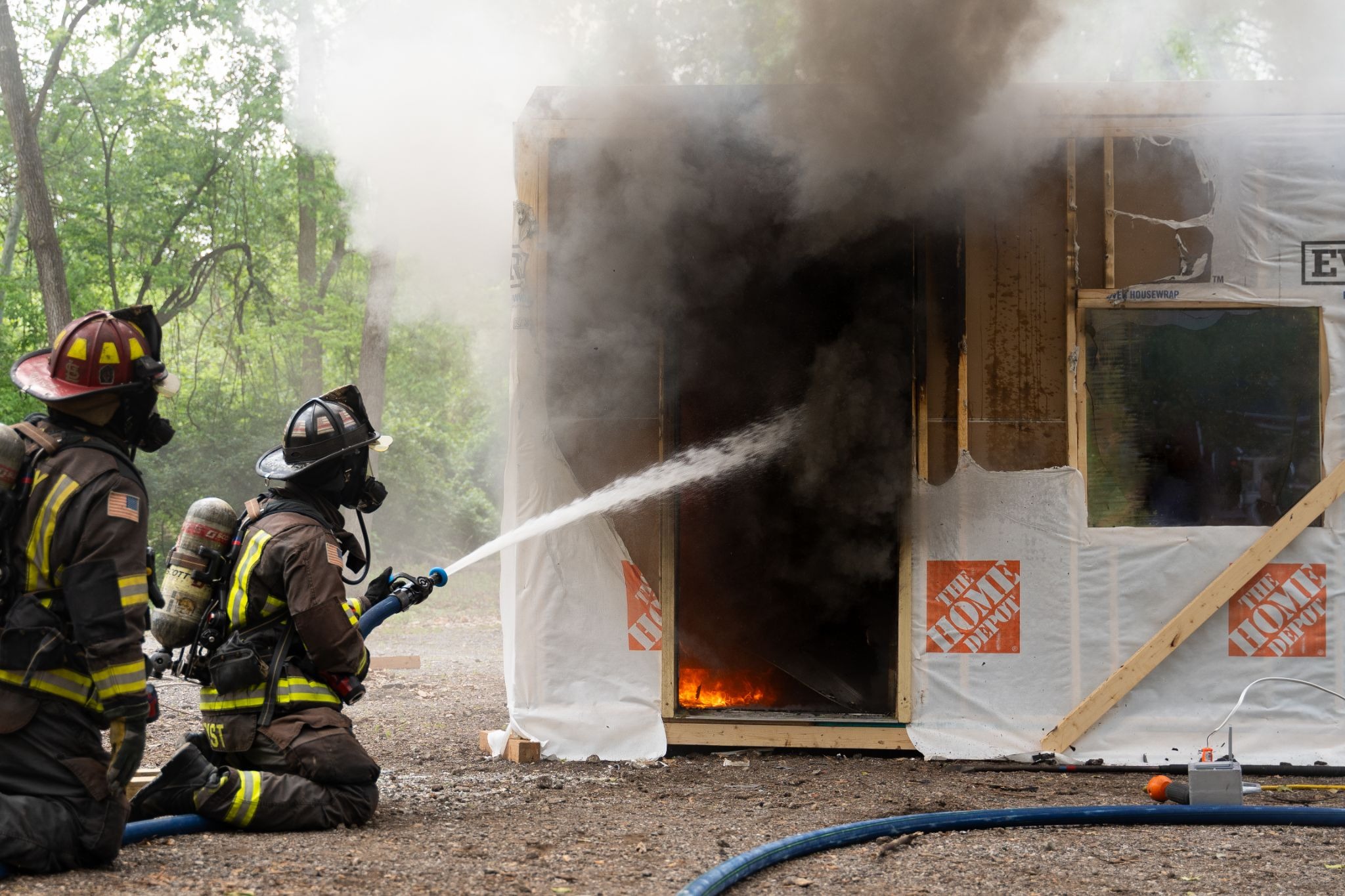

Writing a fire damage estimate is a different challenge than writing one for water damage. Fire loss is variable by nature: a homeowner insisting on another clean because of a persistent smoke odor can turn into a scope-creep problem. When this happens, the gap between your preliminary quote and your final invoice can hurt your margins if the scope isn't defined properly upfront.
In this guide, you'll learn what to include in a fire damage estimate, see an example of one built in Xactimate, and learn how to avoid the most common scope disputes in fire restoration.
What is a Fire Damage Estimate?
A fire damage estimate is a line-by-line breakdown of the cleaning, materials, and labor required to restore a property after a fire. Like any Xactimate estimate, it's typically built for a specific phase of the job—mitigation, cleaning, or reconstruction—and you may need separate estimates for each.
Fire loss generally falls into two categories, and defining which one (or both) you're dealing with early on can shape the entire estimate process:
- Soot and smoke damage: surface-level residue and odor affecting walls, contents, and HVAC systems, addressed through cleaning, sealing, and deodorization.
- Structural damage: charring, warping, or collapse requiring demolition and reconstruction, estimated the same way you'd estimate any rebuild.
Many fire losses also involve water damage — either from fire suppression efforts or the fire itself — which needs to be accounted for separately. Items and structural elements may need to be restored to a dry state or fully replaced, so it's worth building both scenarios into your estimate where it makes sense to do so.
What to Include in an Xactimate Fire Damage Estimate
A complete fire damage estimate includes the same essential sections as any Xactimate estimate:
- General information: Job and client information, insured party name, property address, date of estimate, claim number, and price list used. This is identical to any other Xactimate estimate.
- Scope of work and services provided: A summary of what's being addressed including cleaning, sealing, contents restoration, or reconstruction.
- Line-item cost breakdowns: Labor, equipment, and materials, broken out by task.
- Unit pricing: Xactimate-compatible unit pricing tied to your regional price list.
- Supporting documentation: Before/after photos and any additional notes or sketches.
The line items are where fire estimates become more nuanced than a standard water damage estimate, because the same room can require different cleaning levels for different surfaces.
How to Fill Out a Fire Damage Estimate Correctly
Cleaning levels and terminology
Fire cleaning generally runs in the same three steps: HEPA vacuum, then clean, then smoke seal. Whether all three are needed depends on the extent of the damage. Smoke sealing in particular can be a judgment call.
Each step has its own levels. HEPA vacuuming can be detailed or light. Cleaning can be heavy, average, or light. Setting every line item to heavy clean across the whole home will hyper-inflate your estimate, because the severity isn't uniform: a kitchen fire means heavy work in the kitchen, a lighter clean in the next room, and possibly very little two rooms out behind a closed door. Scaling the level to each room is what keeps the estimate defensible.
- Cleaning level (light/average/heavy): the intensity of cleaning assigned to a given surface or item, based on how much soot or smoke exposure it actually took, not a blanket setting for the whole room.
- HEPA vacuuming (detailed/light): a filtered vacuum used to lift fine soot particulate off surfaces before wet cleaning begins.
- Air scrubber: a standalone unit that filters airborne particulate and odor out of the room — distinct from HEPA vacuuming, which cleans surfaces rather than air.
- Smoke sealing/priming: a sealant applied before repainting to block residual odor from off-gassing through the new paint layer.
- Wet vs. dry cleaning method: the choice between a liquid cleaning agent and a dry method (such as a chemical sponge), determined by the surface material and the type of residue.
Different surfaces often call for different combinations of the above. A soot-covered wood cabinet, a smoke-affected carpet, and a lightly touched ceiling in the same room may each need a different cleaning level and method. This is the kind of specificity that keeps a line-item estimate accurate instead of guesswork.
The line items that get missed
Fire estimates are line-item heavy, and the ones that get overlooked are almost always the small ones. There's a line item for cleaning a toilet and a separate one for the toilet seat, the seat gets missed constantly. Same with windows: people write the window and skip the screen. Baseboards, doorknobs, door faces, trim. None of them amount to much on their own, but across a full structure they add up to real labor.
The order of operations matters. Be as detailed as possible first, get the line items in, then adjust the cleaning level to match each room. Adjusting the level gives you most of the flexibility you need. Removing line items should be the second move, not the first.
Fire Damage Estimate Sample
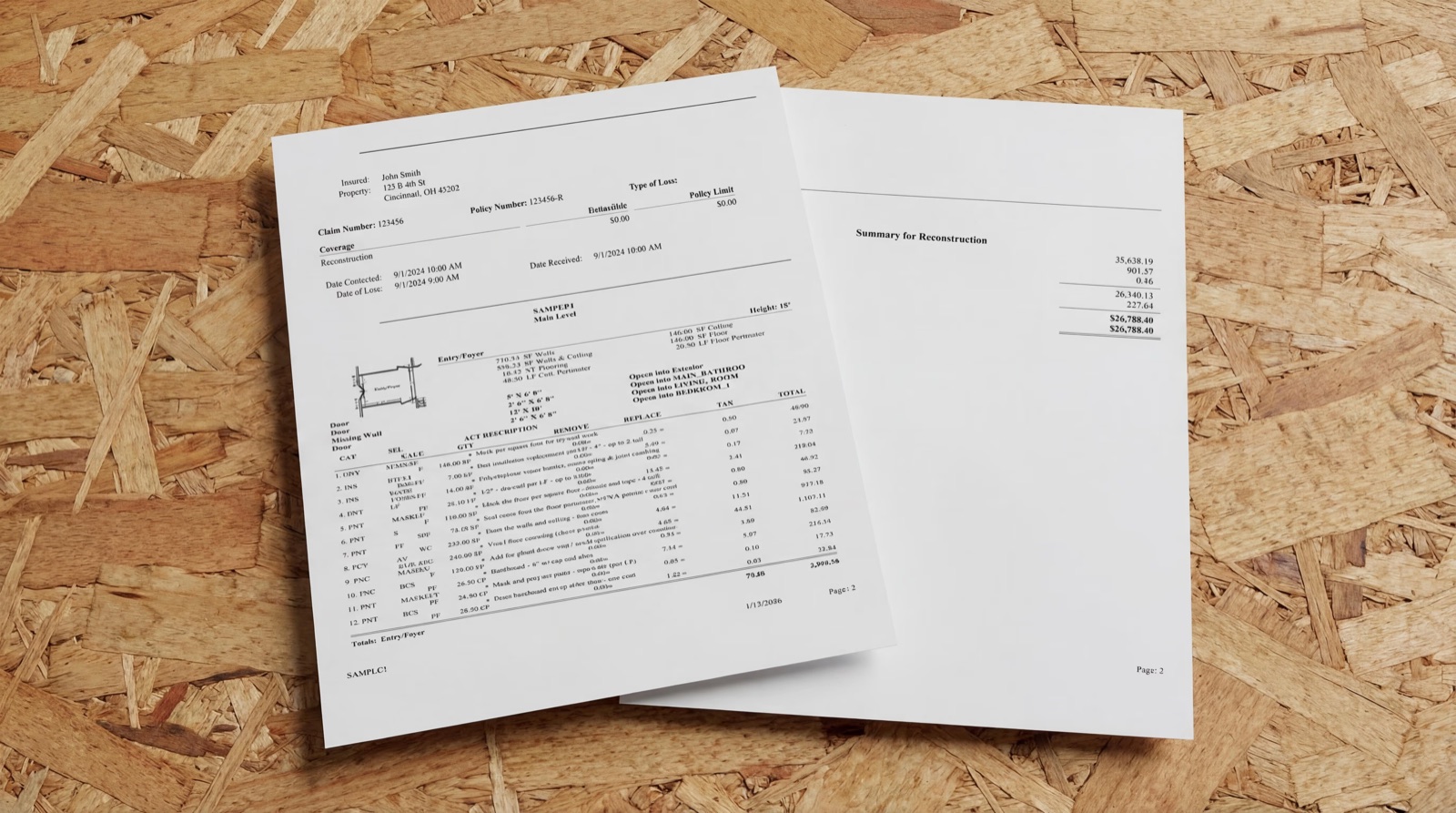
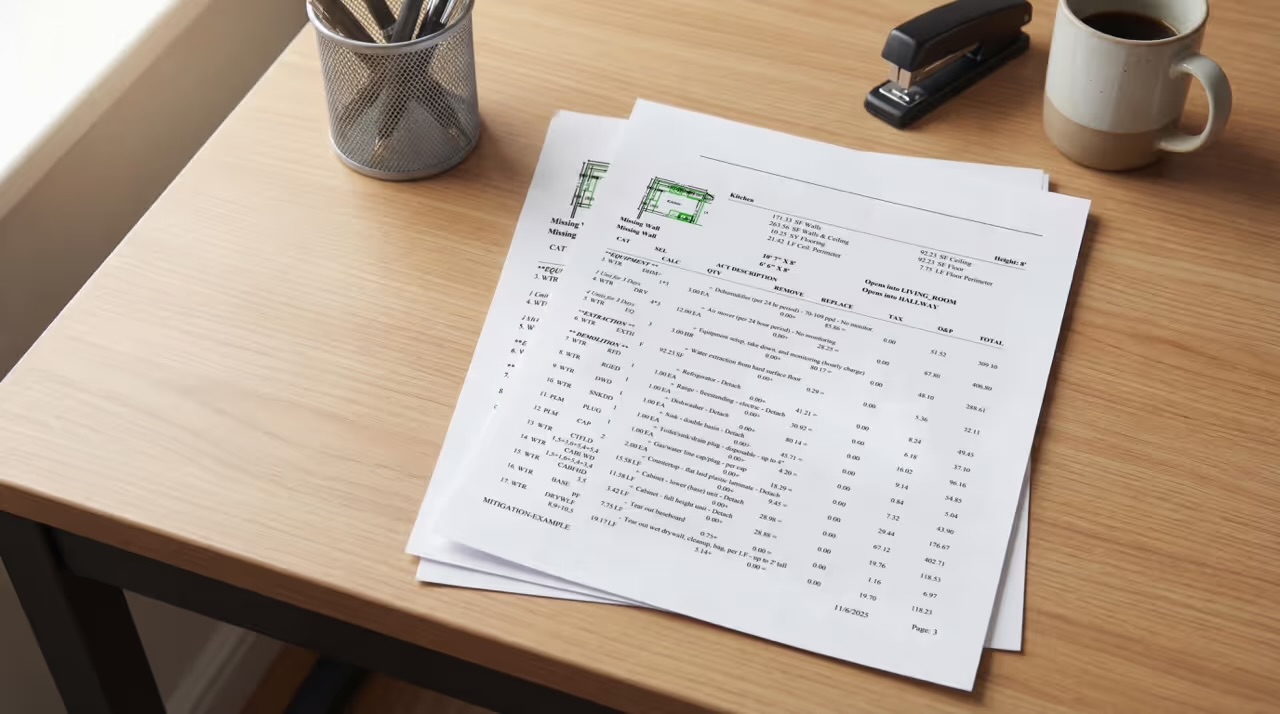
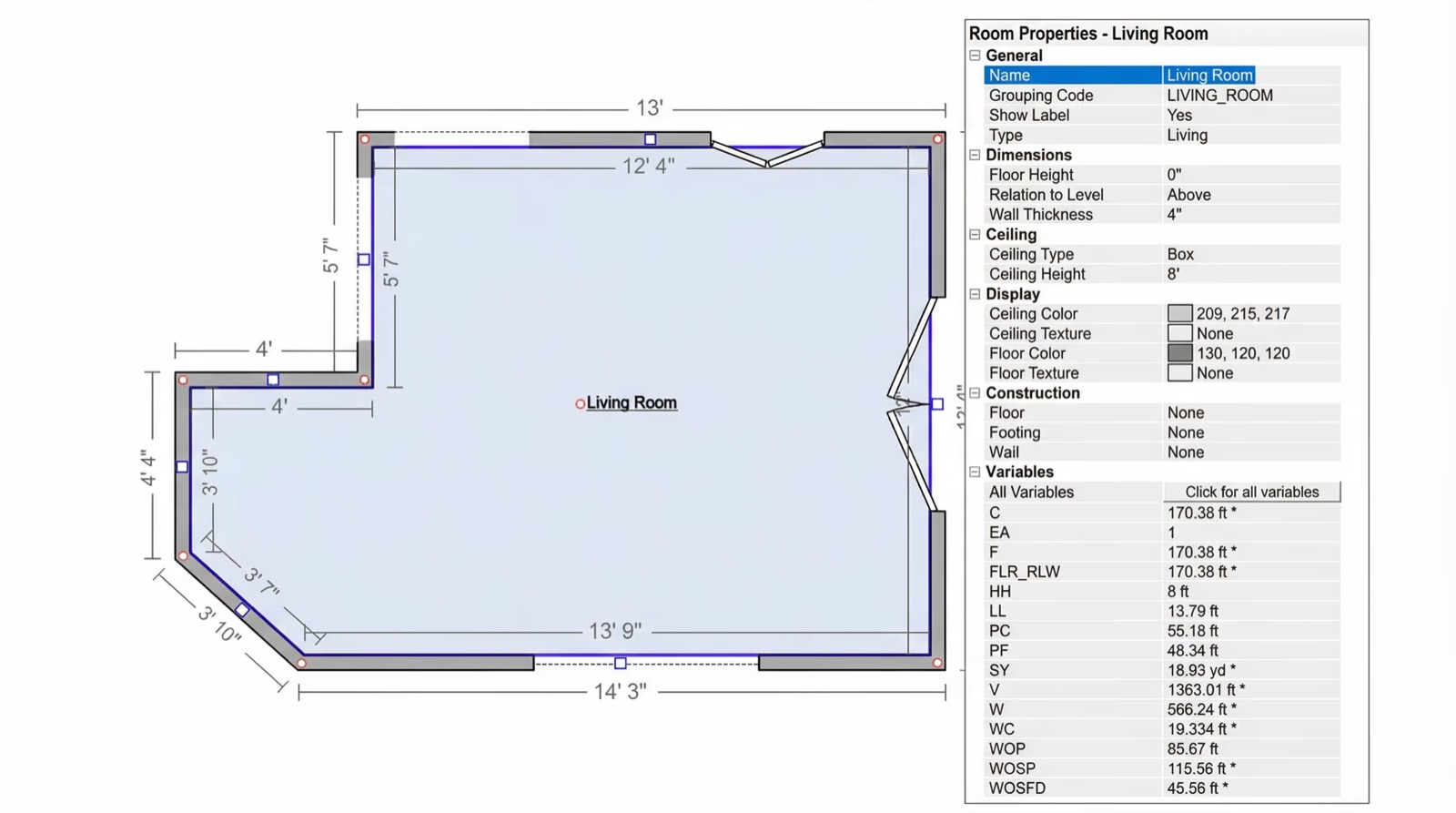
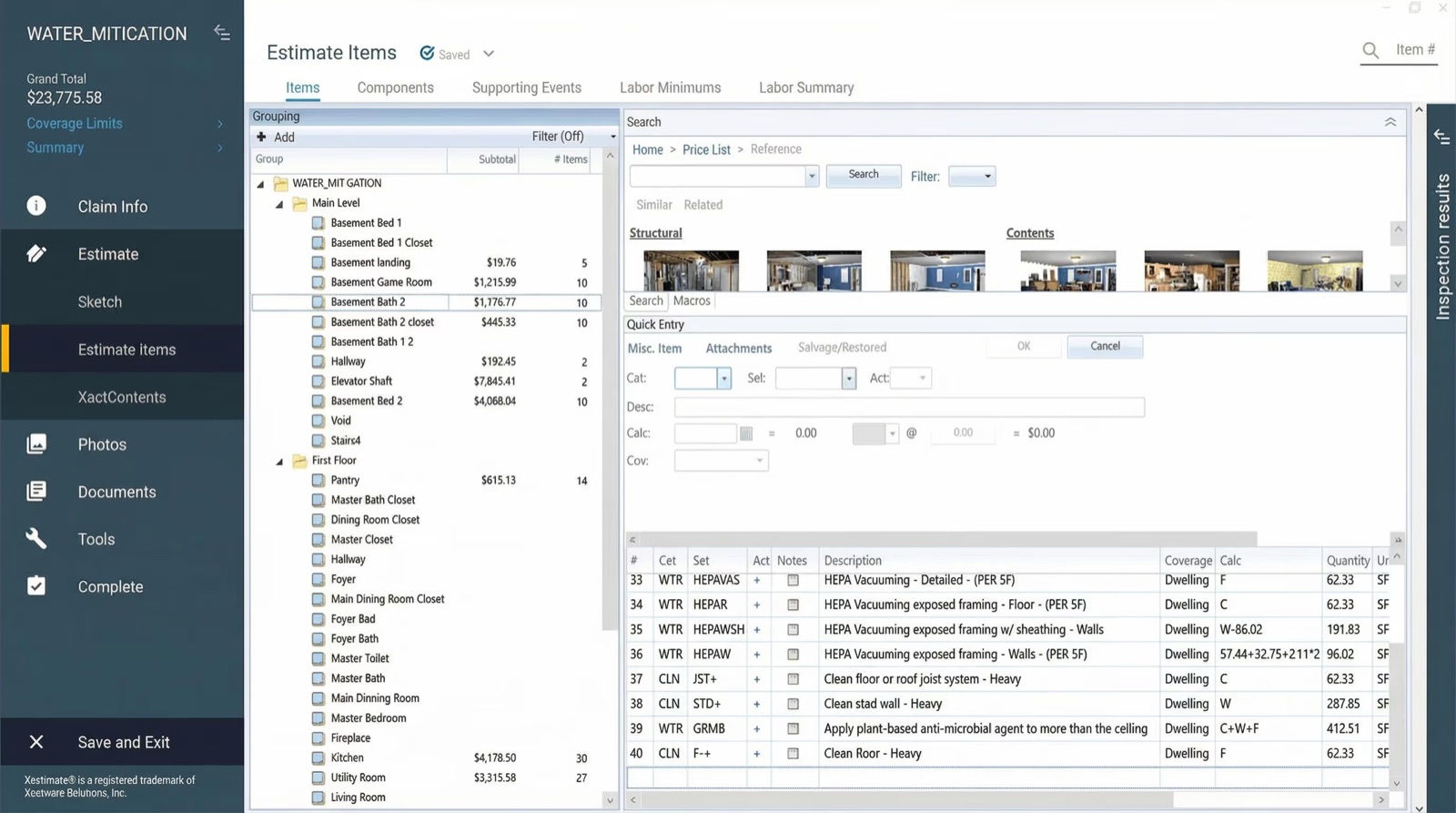
Here's what a completed fire damage estimate looks like in Xactimate:
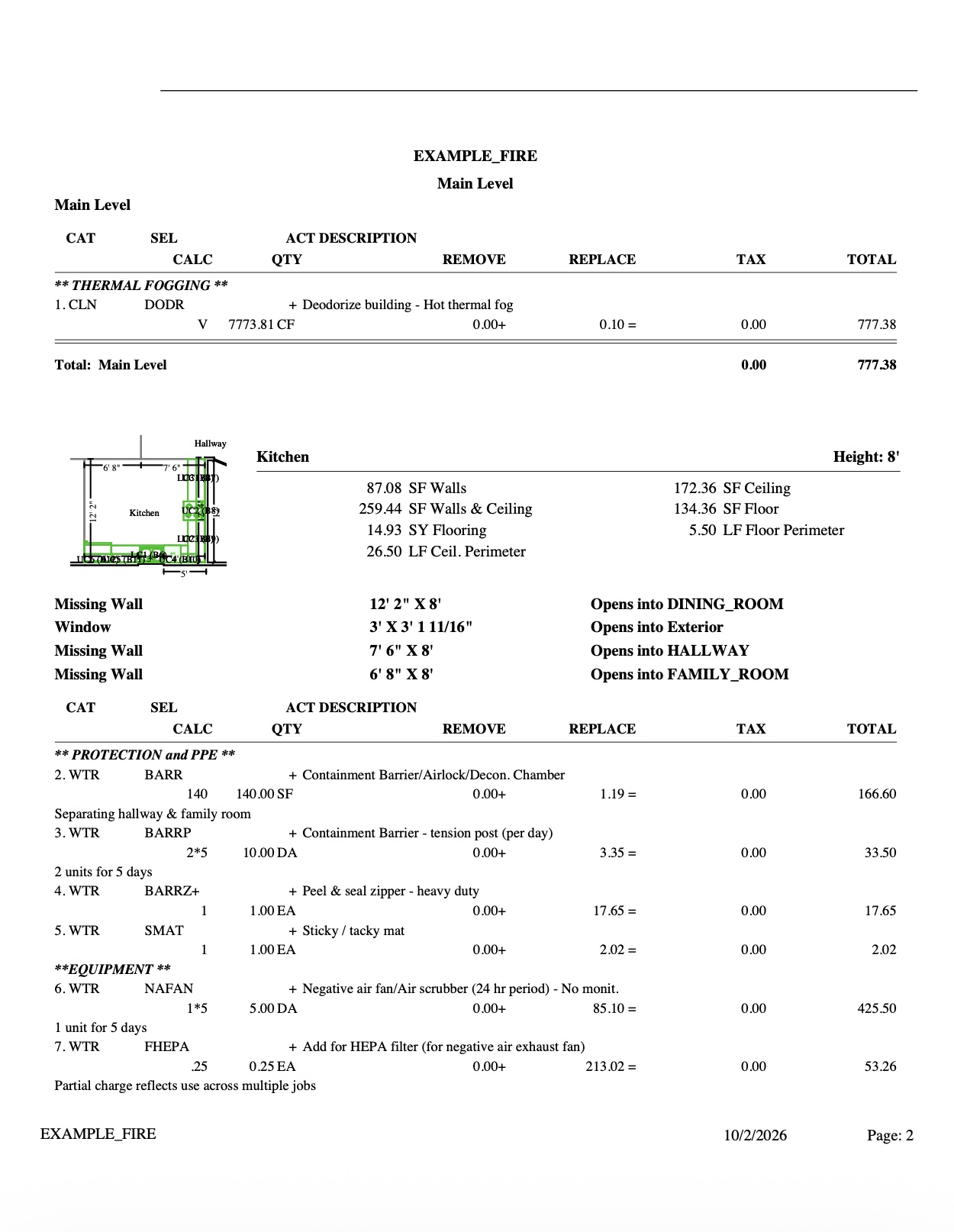
Click here to download this example fire damage estimate.
Getting specific keeps your final estimate close to the preliminary one so that there isn’t a huge discrepancy between the two. With fire estimates, it’s important to include every line item because if you overlook any, more often than not, you’ll need to supplement it with labor hours.
Either way, fire estimates may get reconciled against real labor. If the internal labor summary shows 200 hours and Xactimate is showing 400, there's room to trim. If it runs the other way, an unusual cleaning situation that took longer than Xactimate generally allows, you can usually supplement, provided you can justify and document why.
Step-by-Step Guide to Avoiding Scope Disputes
The hardest part of fire restoration is getting everyone to agree on the scope. Odor is the most common sticking point. A homeowner may report a persistent smell even after framing has been sealed, prompting requests to open up another wall in search of the source. The IICRC has a term for this: psychological odor. It’s the smell the homeowner keeps perceiving after the source has been remediated. Masking agents can help break it down. What's worth understanding is that there's no instrument that settles the question. There's no machine that measures whether odor is gone. It's the human nose, which is why the scope often stays open longer on fire jobs.
A few practical safeguards help keep scope disputes to a minimum:
- Treat a preliminary estimate as preliminary. A prelim is written before any work has been done, off the initial scan and the initial scope. On a fire loss it's understood to move—as crews open things up and find odor pockets, the scope expands. That's the difference from water damage, where you're expected to land close the first time. Minor changes the contractor can make to the estimate directly; if the work has genuinely deviated from the original scope, that's a revision order.
- Write the mitigation estimate after the work is done where you can. Insurers often need the prelim uploaded first, so this isn't always your call. But when you can write it against completed work, you can compare the actual labor hours to what Xactimate shows and that comparison is the fastest way to catch a line item you missed.
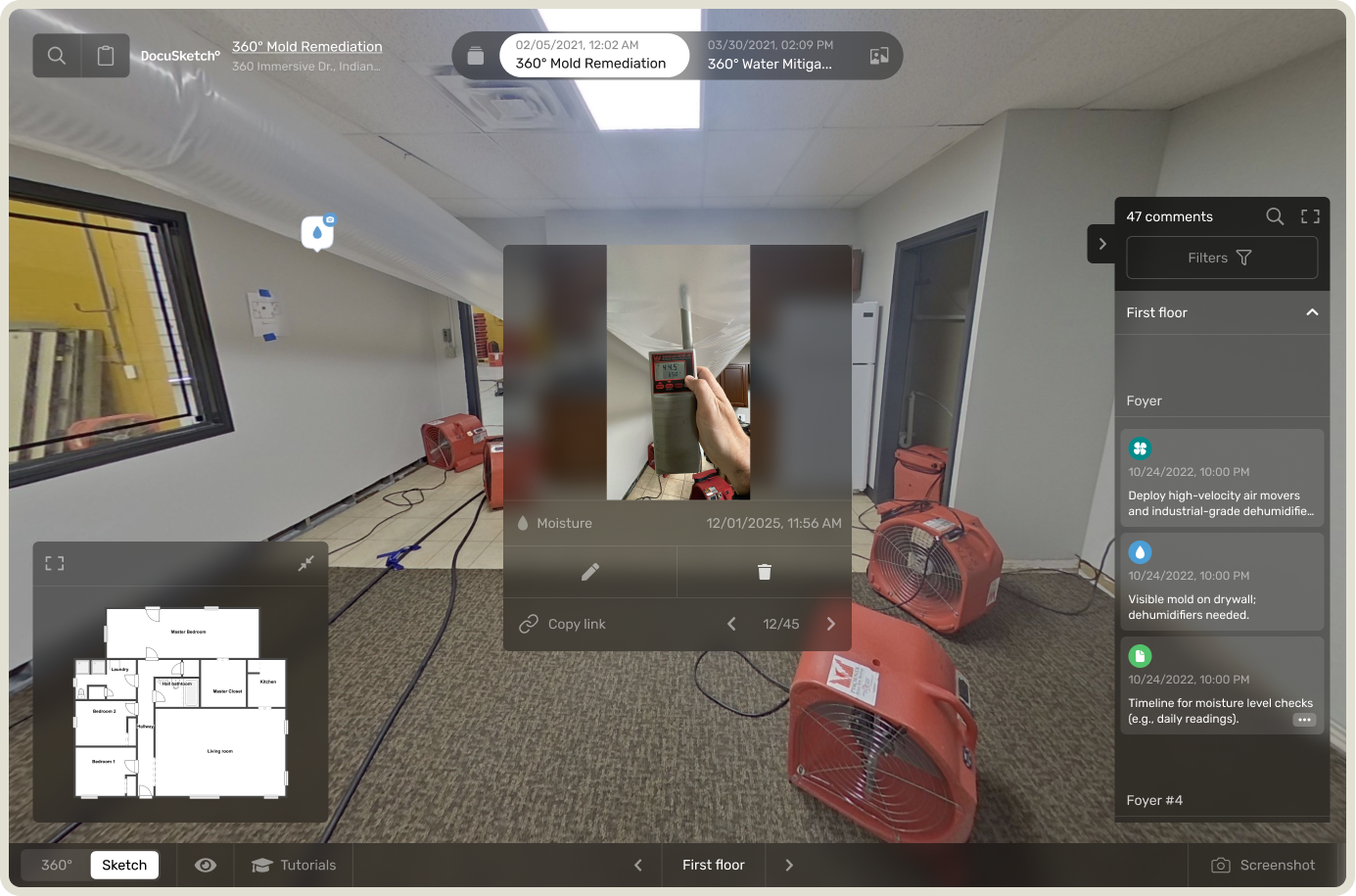
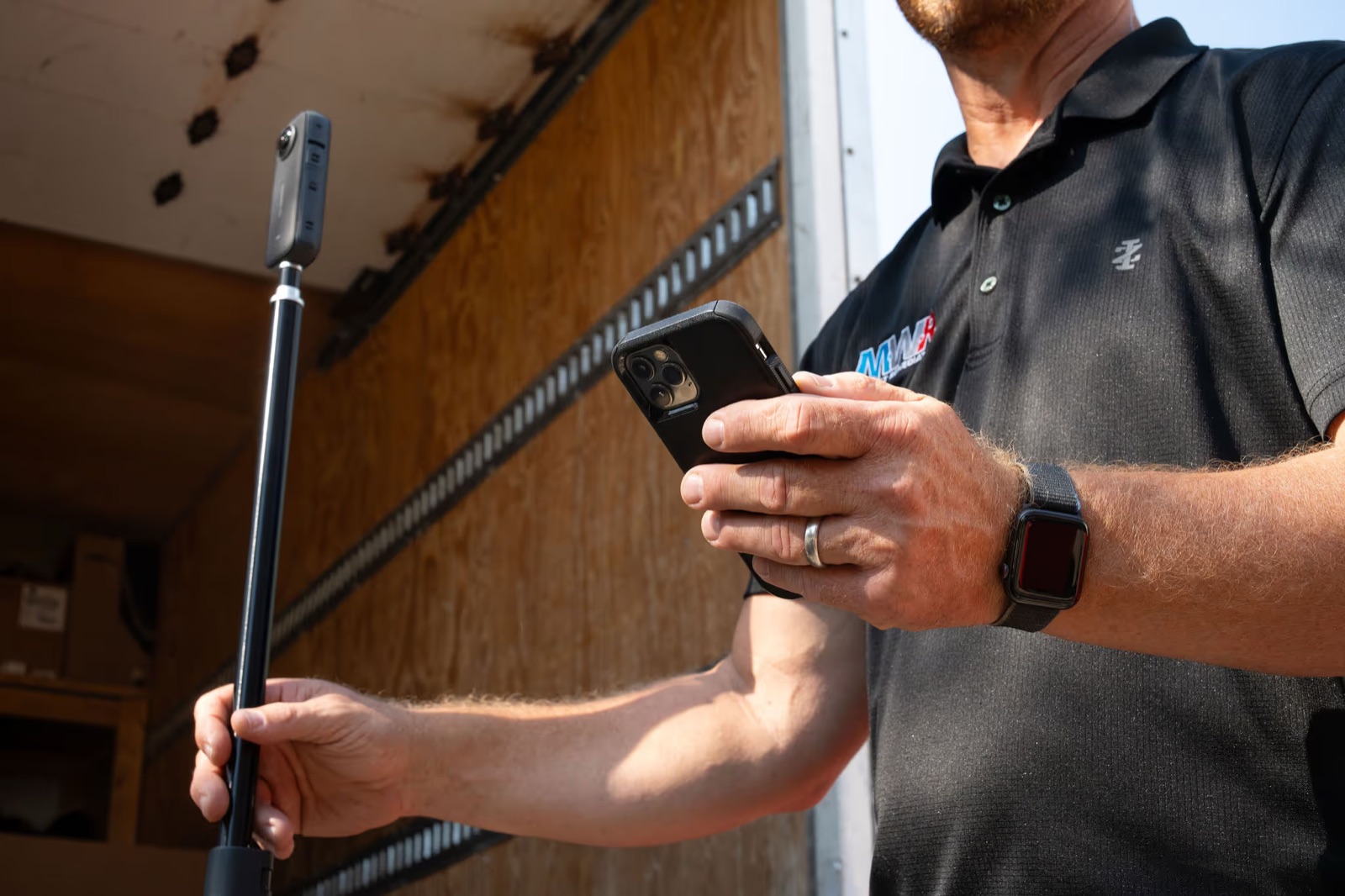
- Account for odor conditions. A 360° camera shows you visual damage, but there's no equivalent to documenting notes for odor. A room that looks unaffected in photos may still need smoke sealing, so treat a remote estimate as a starting point, not a final scope, until you've confirmed odor conditions on site.
- Review before you submit. Running your estimate through a tool like the Estimate Grader can catch missing line items and pricing inconsistencies before the adjuster does.
When Remote Estimating Earns Its Place on a Fire Job
Remote estimating carries the most weight on fire work when the volume is more than a team can physically walk. Large CAT events generate more losses at once than any local crew can scope in sequence, and offloading the estimate writing takes real load off.
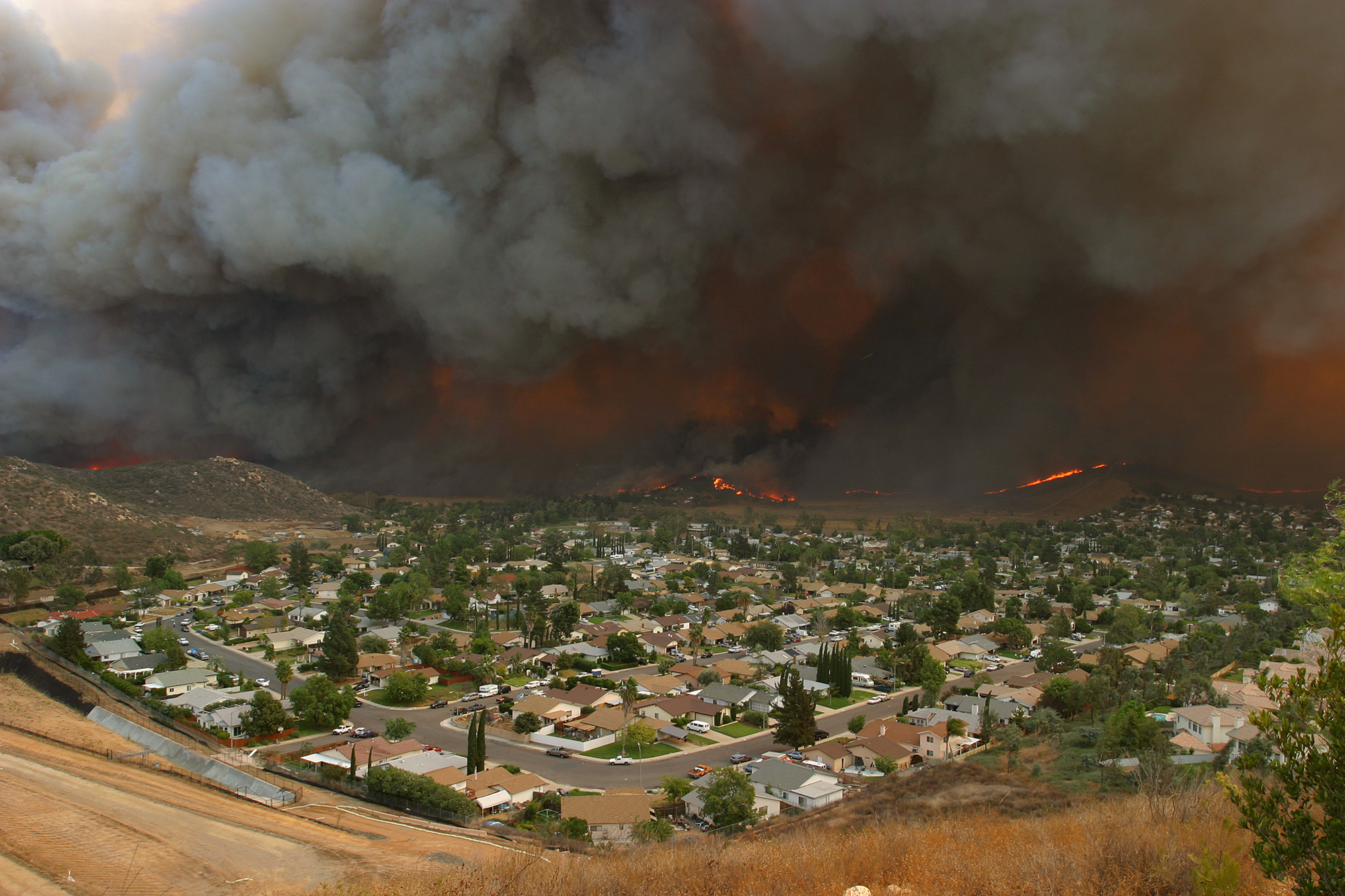
Wildfire losses are also a different scope from a contained interior fire. A structure is often either levelled or left standing with smoke through the entire interior, which means fewer, broader line items—a light clean throughout, plus specialty cleaning for kitchens and bathrooms, plus contents—rather than the room-by-room gradient you'd write after a kitchen fire. The estimate is more macro, and it's more repeatable across a large number of homes.
How DocuSketch Simplifies the Fire Damage Estimating Process
Whether you're a contractor building the initial estimate or an insurance professional reviewing it, the goal is the same: a fire damage estimate that reflects the real scope of the job with no surprises down the line.
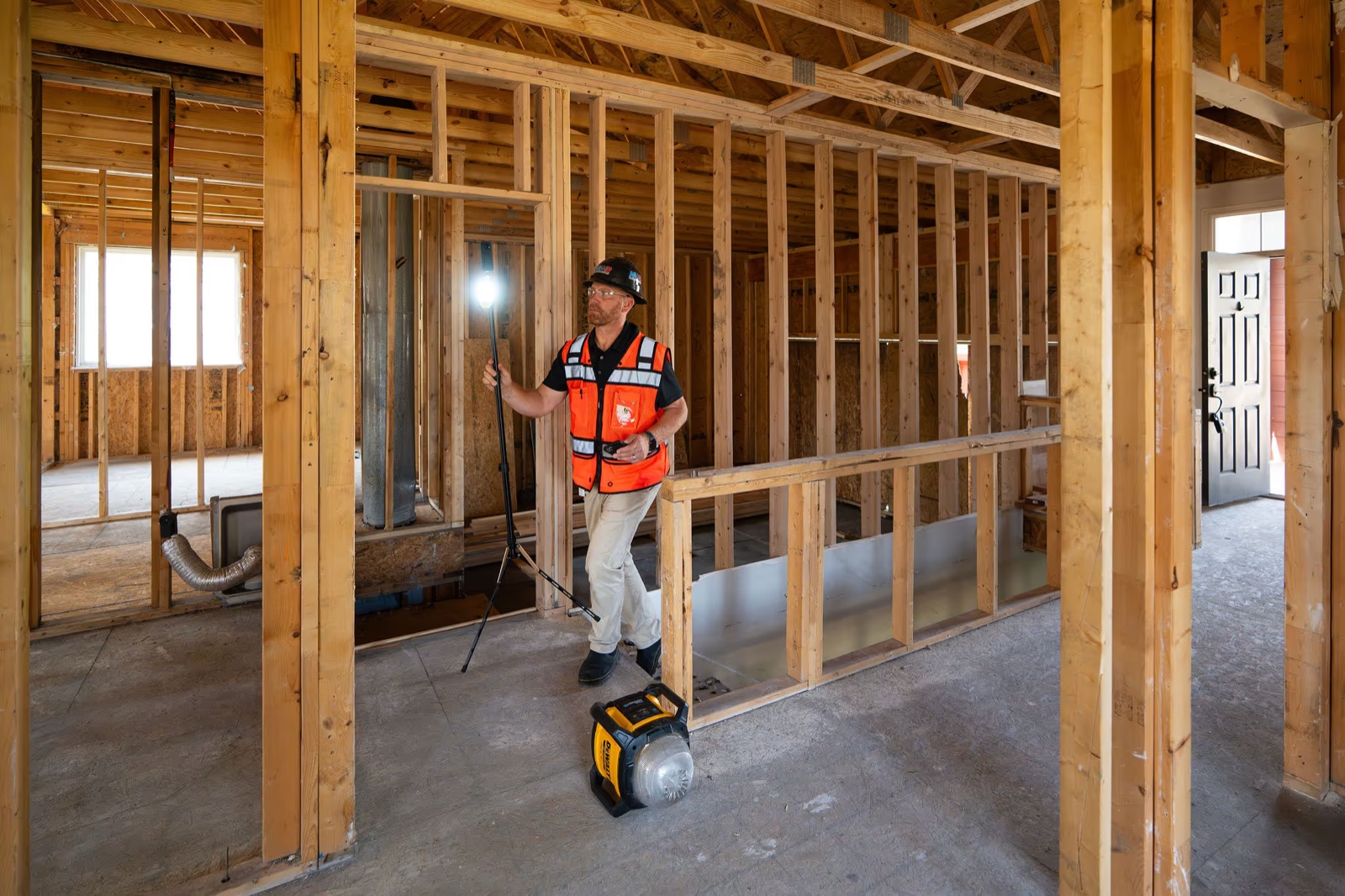
DocuSketch helps close that gap with 360° documentation that gives you visual proof of every line item like the ones shown above, and the Estimate Grader checks your Xactimate estimate for missing items and pricing inconsistencies before it reaches an adjuster's desk.
DocuSketch provides restoration estimating software that combines 360° job site documentation with Xactimate-ready estimates and sketches. Contractors can quickly capture a loss, order a professional estimate, and receive editable Xactimate files—all from one platform—streamlining the entire estimating workflow from field to file.
Writing a fire damage estimate is a different challenge than writing one for water damage. Fire loss is variable by nature: a homeowner insisting on another clean because of a persistent smoke odor can turn into a scope-creep problem. When this happens, the gap between your preliminary quote and your final invoice can hurt your margins if the scope isn't defined properly upfront.
In this guide, you'll learn what to include in a fire damage estimate, see an example of one built in Xactimate, and learn how to avoid the most common scope disputes in fire restoration.
What is a Fire Damage Estimate?
A fire damage estimate is a line-by-line breakdown of the cleaning, materials, and labor required to restore a property after a fire. Like any Xactimate estimate, it's typically built for a specific phase of the job—mitigation, cleaning, or reconstruction—and you may need separate estimates for each.
Fire loss generally falls into two categories, and defining which one (or both) you're dealing with early on can shape the entire estimate process:
- Soot and smoke damage: surface-level residue and odor affecting walls, contents, and HVAC systems, addressed through cleaning, sealing, and deodorization.
- Structural damage: charring, warping, or collapse requiring demolition and reconstruction, estimated the same way you'd estimate any rebuild.
Many fire losses also involve water damage — either from fire suppression efforts or the fire itself — which needs to be accounted for separately. Items and structural elements may need to be restored to a dry state or fully replaced, so it's worth building both scenarios into your estimate where it makes sense to do so.
What to Include in an Xactimate Fire Damage Estimate
A complete fire damage estimate includes the same essential sections as any Xactimate estimate:
- General information: Job and client information, insured party name, property address, date of estimate, claim number, and price list used. This is identical to any other Xactimate estimate.
- Scope of work and services provided: A summary of what's being addressed including cleaning, sealing, contents restoration, or reconstruction.
- Line-item cost breakdowns: Labor, equipment, and materials, broken out by task.
- Unit pricing: Xactimate-compatible unit pricing tied to your regional price list.
- Supporting documentation: Before/after photos and any additional notes or sketches.
The line items are where fire estimates become more nuanced than a standard water damage estimate, because the same room can require different cleaning levels for different surfaces.
How to Fill Out a Fire Damage Estimate Correctly
Cleaning levels and terminology
Fire cleaning generally runs in the same three steps: HEPA vacuum, then clean, then smoke seal. Whether all three are needed depends on the extent of the damage. Smoke sealing in particular can be a judgment call.
Each step has its own levels. HEPA vacuuming can be detailed or light. Cleaning can be heavy, average, or light. Setting every line item to heavy clean across the whole home will hyper-inflate your estimate, because the severity isn't uniform: a kitchen fire means heavy work in the kitchen, a lighter clean in the next room, and possibly very little two rooms out behind a closed door. Scaling the level to each room is what keeps the estimate defensible.
- Cleaning level (light/average/heavy): the intensity of cleaning assigned to a given surface or item, based on how much soot or smoke exposure it actually took, not a blanket setting for the whole room.
- HEPA vacuuming (detailed/light): a filtered vacuum used to lift fine soot particulate off surfaces before wet cleaning begins.
- Air scrubber: a standalone unit that filters airborne particulate and odor out of the room — distinct from HEPA vacuuming, which cleans surfaces rather than air.
- Smoke sealing/priming: a sealant applied before repainting to block residual odor from off-gassing through the new paint layer.
- Wet vs. dry cleaning method: the choice between a liquid cleaning agent and a dry method (such as a chemical sponge), determined by the surface material and the type of residue.
Different surfaces often call for different combinations of the above. A soot-covered wood cabinet, a smoke-affected carpet, and a lightly touched ceiling in the same room may each need a different cleaning level and method. This is the kind of specificity that keeps a line-item estimate accurate instead of guesswork.
The line items that get missed
Fire estimates are line-item heavy, and the ones that get overlooked are almost always the small ones. There's a line item for cleaning a toilet and a separate one for the toilet seat, the seat gets missed constantly. Same with windows: people write the window and skip the screen. Baseboards, doorknobs, door faces, trim. None of them amount to much on their own, but across a full structure they add up to real labor.
The order of operations matters. Be as detailed as possible first, get the line items in, then adjust the cleaning level to match each room. Adjusting the level gives you most of the flexibility you need. Removing line items should be the second move, not the first.
Fire Damage Estimate Sample
Here's what a completed fire damage estimate looks like in Xactimate:
Click here to download this example fire damage estimate.
Getting specific keeps your final estimate close to the preliminary one so that there isn’t a huge discrepancy between the two. With fire estimates, it’s important to include every line item because if you overlook any, more often than not, you’ll need to supplement it with labor hours.
Either way, fire estimates may get reconciled against real labor. If the internal labor summary shows 200 hours and Xactimate is showing 400, there's room to trim. If it runs the other way, an unusual cleaning situation that took longer than Xactimate generally allows, you can usually supplement, provided you can justify and document why.
Step-by-Step Guide to Avoiding Scope Disputes
The hardest part of fire restoration is getting everyone to agree on the scope. Odor is the most common sticking point. A homeowner may report a persistent smell even after framing has been sealed, prompting requests to open up another wall in search of the source. The IICRC has a term for this: psychological odor. It’s the smell the homeowner keeps perceiving after the source has been remediated. Masking agents can help break it down. What's worth understanding is that there's no instrument that settles the question. There's no machine that measures whether odor is gone. It's the human nose, which is why the scope often stays open longer on fire jobs.
A few practical safeguards help keep scope disputes to a minimum:
- Treat a preliminary estimate as preliminary. A prelim is written before any work has been done, off the initial scan and the initial scope. On a fire loss it's understood to move—as crews open things up and find odor pockets, the scope expands. That's the difference from water damage, where you're expected to land close the first time. Minor changes the contractor can make to the estimate directly; if the work has genuinely deviated from the original scope, that's a revision order.
- Write the mitigation estimate after the work is done where you can. Insurers often need the prelim uploaded first, so this isn't always your call. But when you can write it against completed work, you can compare the actual labor hours to what Xactimate shows and that comparison is the fastest way to catch a line item you missed.
- Account for odor conditions. A 360° camera shows you visual damage, but there's no equivalent to documenting notes for odor. A room that looks unaffected in photos may still need smoke sealing, so treat a remote estimate as a starting point, not a final scope, until you've confirmed odor conditions on site.
- Review before you submit. Running your estimate through a tool like the Estimate Grader can catch missing line items and pricing inconsistencies before the adjuster does.
When Remote Estimating Earns Its Place on a Fire Job
Remote estimating carries the most weight on fire work when the volume is more than a team can physically walk. Large CAT events generate more losses at once than any local crew can scope in sequence, and offloading the estimate writing takes real load off.
Wildfire losses are also a different scope from a contained interior fire. A structure is often either levelled or left standing with smoke through the entire interior, which means fewer, broader line items—a light clean throughout, plus specialty cleaning for kitchens and bathrooms, plus contents—rather than the room-by-room gradient you'd write after a kitchen fire. The estimate is more macro, and it's more repeatable across a large number of homes.
How DocuSketch Simplifies the Fire Damage Estimating Process
Whether you're a contractor building the initial estimate or an insurance professional reviewing it, the goal is the same: a fire damage estimate that reflects the real scope of the job with no surprises down the line.
DocuSketch helps close that gap with 360° documentation that gives you visual proof of every line item like the ones shown above, and the Estimate Grader checks your Xactimate estimate for missing items and pricing inconsistencies before it reaches an adjuster's desk.
DocuSketch provides restoration estimating software that combines 360° job site documentation with Xactimate-ready estimates and sketches. Contractors can quickly capture a loss, order a professional estimate, and receive editable Xactimate files—all from one platform—streamlining the entire estimating workflow from field to file.

Related Articles



%20(1).jpg)